Thursday, July 19, 2012

Republicans attack Bachmann Muslim conspiracy letter

Republicans attack Bachmann Muslim conspiracy letter

Huma Abedin in a 20 September 2011 file photo  
Huma Abedin worked with Secretary Clinton in the Senate as well

Related Stories

Senior US Republicans have strongly condemned former presidential candidate Michele Bachmann for attacks on a long-time aide to Hillary Clinton.
She said Huma Abedin had connections to the Muslim Brotherhood and implied she was part of a wider conspiracy.
Mrs Bachmann was first criticised by Senator John McCain, then by House Speaker John Boehner and others.
Minnesota congresswoman Mrs Bachmann rose to prominence criticising President Barack Obama in 2008.
She branded the president "un-American" in a TV interview, later becoming a darling of the Tea Party, and founding the Tea Party caucus in the House before launching a presidential bid in 2011.
But her latest statements appear to have angered her party colleagues.
"These attacks on Huma have no logic, no basis and no merit, and they need to stop now," veteran Senator John McCain said on Wednesday.'
Mrs Bachmann, along with four other Republican legislators, wrote a letter to the State Department, along with other government agencies, calling for a probe of Muslim Brotherhood influence in the US government, singling out Ms Abedin.
The letter alleged that she had connections to the Muslim Brotherhood through her family.
'McCarthy level' "From everything I do know of [Huma Abedin], she has a sterling character, and I think accusations like this being thrown around are pretty dangerous," House Speaker John Boehner said.
Senator Lindsay Graham told Politico the charges were "ridiculous" and that Ms Abedin "is about as far away from the Muslim Brotherhood view of women and ideology as you possibly could get".
Mrs Bachmann also received calls to apologise from Representative Keith Ellison, a Democrat who is a Muslim. On cable network MSNBC, he rejected her accusations that the letters had been distorted.
In addition, Mrs Bachmann's former campaign manager Ed Rollins wrote a scathing attack on Fox News' website, saying the Minnesota congresswoman "sometimes has difficulty with her facts, but this is downright vicious and reaches the late Senator Joe McCarthy level".
Sen McCarthy became infamous for his false charges in the 1950s that Communist spies had infiltrated the state department.
As of Wednesday, Mrs Bachmann refused to apologise, saying she would "not be silent as this administration appeases our enemies instead of telling the truth about the threats our country faces".
Ms Abedin, who was also Mrs Clinton's aide during her Senate term, is a Muslim of Pakistani descent who was born in Michigan.
She is married to former Representative Anthony Weiner, who resigned in disgrace last year after sending lewd online photos to other women.
"My family and I are grateful to Senator McCain," Mr Weiner said to the Washington Post on Wednesday. "I think he spoke for many Americans in expressing his disgust for the charge against my wife."

Source

Wednesday, July 18, 2012

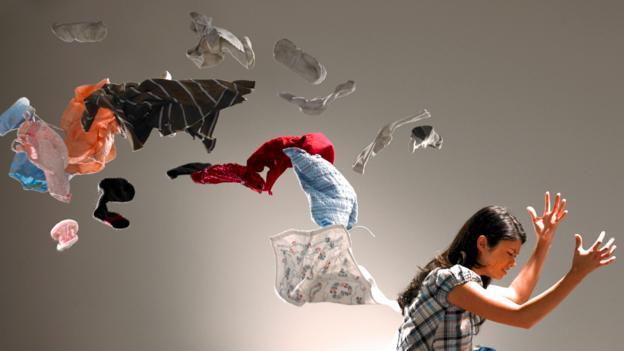
Why we love to hoard… and how you can overcome it

Why we love to hoard… and how you can overcome it


Why we love to hoard
(Copyright: Thinkstock)
Understanding the psychology behind why we like to accumulate all manner of items can in fact help you to lead a clutter-free life. 


Question: How do you make something instantly twice as expensive?
Answer: By thinking about giving it away. 


This might sound like a nonsensical riddle, but if you've ever felt overly possessive about your regular parking space, your pen, or your Star Wars box sets, then you're experiencing some elements behind the psychology of ownership. Our brains tell us that we value something merely because it is a thing we have.

This riddle actually describes a phenomenon called the Endowment Effect. The parking space, the pen and the DVDs are probably the same as many others, but they're special to you. Special because in some way they are yours.
You can see how the endowment effect escalates – how else can you explain the boxes of cassette tapes, shoes or mobile phones that fill several shelves of your room… or even several rooms?

No trade

To put a scientific lens on what's going on here, a team led by psychologist Daniel Kahneman carried out a simple experiment. They took a class of ordinary University students and gave half of them a University-crested mug, the other half received $6 – the nominal cost of the mug.
Classic economics states that the students should begin to trade with each other. The people who were given cash but liked mugs should swop some of their cash a mug, and some of the people who were given mugs should swop their mugs for some cash. This, economic theory says, is how prices emerge – the interactions of all buyers and sellers finds the ideal price of goods. The price – in this case, of mugs – will be a perfect balance between the desires of people who want a mug and have cash, and the people who want cash and have a mug.

But economic theory lost out to psychology. Hardly any students traded. Those with mugs tended to keep them, asking on average for more than $5 to give up their mug. Those without mugs didn't want to trade at this price, being only willing to spend an average of around $2.50 to purchase a mug.

Remember that the mugs were distributed at random. It would be weird if, by chance, all the “mug-lovers” ended up with mugs, and the “mug-haters” ended up without. Something else must be going on to explain the lack of trading. It seems the only way to understand the high-value placed on the mugs by people who were given one at random is if the simple act of being given a mug makes you value it twice as highly as before.
This is the endowment effect, and it is the reason why things reach a higher price at auctions – because people become attached to the thing they're bidding for, experiencing a premature sense of ownership that pushes them to bid more than they would otherwise. It is also why car dealers want you to test drive the car, encouraging you in everyway to think about what it would be like to possess the car. The endowment effect is so strong that even imagined ownership can increase the value of something.

Breaking habits

The endowment effect is a reflection of a general bias in human psychology to favour the way things are, rather than the way they could be. I call this status quo bias, and we can see reflections of it in the strength of habits that guide our behavior, in the preference we have for the familiar over the strange or the advantage the incumbent politician has over a challenger.
Knowing the powerful influence that possession has on our psychology, I take a simple step to counteract it. I try to use my knowledge of the endowment effect to help me de-clutter my life. Perhaps this can be useful to you too.

Say I am cleaning out my stuff. Before I learnt about the endowment effect I would go through my things one by one and try to make a decision on what to do with it. Quite reasonably, I would ask myself whether I should throw this away. At this point, although I didn't have a name for it, the endowment effect would begin to work its magic, leading me to generate all sorts of reasons why I should keep an item based on a mistaken estimate of how valuable I found it. After hours of tidying I would have kept everything, including the 300 hundred rubber bands (they might be useful one day), the birthday card from two years ago (given to me by my mother) and the obscure computer cable (it was expensive).

Now, knowing the power of the bias, for each item I ask myself a simple question: If I didn't have this, how much effort would I put in to obtain it? And then more often or not I throw it away, concluding that if I didn't have it, I wouldn't want this.

Let this anti-endowment effect technique perform its magic for you, and you too will soon be joyously throwing away things that you only think you want, but actually wouldn't trouble yourself to acquire if you didn't have them.

And here’s the thing… it works for emails too. If someone sends me a link to an article or funny picture, I don't think "I must look at that", I ask "If I hadn't just been sent this link, how hard would I endeavour to find out this information for myself?". And then I delete the email, thinking that however fascinating that article on the London sewerage system sounds or that funny picture of a cat promises to be, I didn't want them before the email was in my possession, so I probably don't really want them now.
That’s my tip for managing my clutter. If you have any others, let me know.

Source


Friday, July 13, 2012

The American with the other Georgia on his mind

The American with the other Georgia on his mind

Help
American artist John H Wurdeman was drawn to the former Soviet state of Georgia by the country's folk music. Sixteen years later he is still living there, immersed in a culture he says is full of tradition and emotion.
Georgia is a place of "very real tears but also very genuine laughter", says the impressionist painter, 37, who trained at the Surikov Institute in Moscow, Russia.
Wurdeman went to Georgia in 1996 and settled in the town of Signaghi, in the centre of the country's wine region. He lives there with his wife Ketevan and their two children and now runs a winery, Pheasant's Tears, dedicated to preserving Georgian wine culture.
He tells the BBC about his passion for art and wine and why Georgians are more prepared to express emotions to strangers.
Produced for the BBC by Ilya Shnitser.


See Video HERE at the source:
http://www.bbc.co.uk/news/magazine-18654325

Wednesday, June 13, 2012

Human Microbiome Project reveals largest microbial map

Human Microbiome Project reveals largest microbial map

Illustration showing the 5 areas of the body studied  
Researchers sampled five areas of the body of hundreds of healthy volunteers

Related Stories

"When I get up from my chair, ten times more bacterial cells get up than human ones," says Dr Bruce Birren.
He is one of the hundreds of US scientists involved in the world's most extensive map of the microbes that live in and on us.
The Human Microbiome Project has catalogued the genetic identity of many bacteria, viruses and other organisms that live in intimate contact with us.
They are not germs that need eliminating but a fundamental part of what makes us human, researchers say.

Start Quote

I might have a different organism on my tongue than you do on your tongue but collectively they bring the same genes to the party..”
Dr Bruce Birren Broad Institute of the MIT and Harvard
Yet until recently, little was known about the identity of trillions of the microbes populating our bodies.
'Beneficial bugs' For centuries we could only investigate microbes that can survive in laboratories and study them in isolation - often one microbe at a time.
But with the advent of ever-improving techniques to sequence DNA, the Human Microbiome Project has been able to uncover microbes that have never been seen before and look at how they behave as communities.
Many of the results of the five-year project, launched by the National Institutes of Health, have been published in Nature and PLoS journals.
Over 200 healthy men and women from the US had microbe samples taken from various parts of their bodies.
And researchers were able to find over 10,000 different types of organisms as part of the healthy human microbiome.
Most of these microbes appeared to do no harm at all. In fact, there is growing evidence that these bugs help us in many ways.
Some help us get energy from food and others help us absorb nutrients such as vitamins.

Microbial benefits

  • Microbes help us get energy from food
  • Allow us to absorb vitamins
  • Can help produce molecules which fight against inflammation
  • There is growing evidence that they help develop our immune systems
'Shared microbes?'
And we are learning about the role they play in shaping, rather than just attacking our immune systems, says Prof Barbara Methe of the J Craig Venter Institute, also involved in the project.
One of the key questions researchers asked was - is there a core set of microbes that all humans share?
Scientists actually found a diversity of microbes across different human beings and unique communities of microbes living at different body sites.
But what surprised some is that at specific parts of the body, many of the microbes shared similar jobs.
"I might have a different organism on my tongue than you do on your tongue but collectively they bring the same genes to the party - so they are able to perform some of the same functions, for example, breaking down sugars," Dr Birren says.
Picture of microbes growing in a laboratory Until recently scientists could only identify microbes that could be grown in a laboratory
This finding suggests a shift in thinking from a one-microbe model of disease, that essentially pins the blame for certain illnesses on one bug.
'Bacterial phone-book' Perhaps what matters in some diseases is not the particular type of bug, but that the function of this group of bugs has somehow gone awry, Dr Huttenhower says.
Researchers found that healthy volunteers carry low levels of microbes, classically been thought to cause disease.
For example, the bacteria Staphylococcus aureus, which can be involved the infection MRSA, was found in the noses of about 30 percent.
"We now have a phone-book of 100 of these bugs, which in the right environment, have the potential to go bad.
"We know where they live in healthy people and which organisms surround them too. So perhaps we can begin to understand what keeps them in check and where their reservoirs are," Dr Huttenhower says.

Human Microbiome Project

  • 300 healthy volunteers studied
  • Five body areas investigated - nose, mouth, skin, urogenital tract and gastrointestinal tract
  • Volunteers were sampled up to three times during the study period
  • More than 5,000 samples were collected
  • Over 10,000 different microbes found
And most microbes carry at least 100 times as many genes as we do.
These genes have just as much ability to influence our health and disease-risk as our own, says Dr Curtis Huttenhower, from the Harvard School of Public Health, another contributor to the project.
The ability to refer to this new genetic database and investigate microbiomes that fall outside its boundaries, will be the long-term importance of this project, he says.
'Unknown land' Dr Lita Proctor, programme director of the project says there is a growing understanding that we pick it up in the very early stages of life.
"The human genome is inherited but the human microbiome is acquired- that means it has a very important changeable, mutable property.
"This gives us something to work with in the clinic. If you can manipulate the microbiome you can keep a healthy microbiome healthy or re-balance an unhealthy one," she says.
But who owns the microbiomes inhabiting our bodies? And what does this mean for the regulation of pro-biotics that can change them?, asks ethicist Prof Any McGuire of Baylor College of Medicine.
These are questions that will need to be ironed out as our knowledge of this area expands, she says.
But we only have half the story. We need to find out much more about how the microbiome talks to human cells says Prof David Relman of Stanford University.
"It is still an unknown land. Even though it is on home turf we are still discovering new life forms on it," he says.

Source

China 'forced abortion photo' sparks outrage

China 'forced abortion photo' sparks outrage

Map

Related Stories

A photo purporting to show a baby whose mother was forced to have an abortion has shocked Chinese internet users.
Feng Jiamei, from Zhenping county in Shaanxi, was allegedly made to undergo the procedure by local officials in the seventh month of pregnancy.
Ms Feng was forced into the abortion as she couldn't pay the fine for having a second child, US-based activists said.
Rights groups say China's one-child policy has meant women being coerced into abortions, which Beijing denies.
National and local family planning authorities are investigating the incident, the Global Times newspaper reports.
"Feng Jianmei's story demonstrates how the One-Child Policy continues to sanction violence against women every day," said Chai Ling of the US-based activist group All Girls Allowed.
The group says it spoke to Ms Feng and her husband Deng Jiyuan after the incident. Mr Deng said his wife had been forcibly taken to hospital and restrained before the procedure.
Unnamed local officials in Zhenping county quoted in local media reports denied forcing Ms Feng to have the abortion.
"This is what they say the Japanese devils and Nazis did. But it's happening in reality and it is by no means the only case... They [the officials] should be executed," one reader on news website netease.com said, according to Agence France-Presse.
Activist Chen Guangcheng, who was put under virtual house arrest for campaigning against forced abortions, fled China to the US last month.

Source

Gaza water too contaminated to drink, say charities

Gaza water too contaminated to drink, say charities

A Palestinian boy carries chicken waterers found in a coop as he walks over debris at the site of an Israeli air strike in Rafah in the southern Gaza Strip on 6 June 2012  
War damage is in part to blame for the dire state of Gaza's water and sewage systems, the report says
Gaza's only fresh source of water is too dangerous to drink because of contamination by fertiliser and human waste, a new report says.
The charities Save the Children and Medical Aid for Palestinians say the number of children being treated for diarrhoea has doubled in five years.
They say Israel's five-year blockade of the territory is preventing crucial sanitation equipment from getting in.
The blockade must be lifted "in its entirety", they say.
The report, Gaza's Children: Falling Behind, says that high levels of nitrates and other contaminants have been found in the main water supply.
Nitrates, found in faeces and fertiliser, are linked to the doubling of the incidence of watery diarrhoea in children since the blockade began, it says.
As well as the blockade, it blames war damage and chronic underinvestment.
Desperate families are turning to private water sources - without realising that this water too is contaminated, often at 10 times the safe level, the report says.
And Gaza's sewage system is "completely broken".
Israel insists that the blockade of Gaza has been eased considerably in recent months, says the BBC's Wyre Davies in Jerusalem.
It says more supplies and building materials to help reconstruction of the territory's battered infrastructure are being allowed in.
But the report says this is not enough.
"As a matter of urgent priority for the health and well-being of Gaza's children, Israel must lift the blockade in its entirety to enable the free movement of people and goods in and out of Gaza," it says.
It also calls on the international community, the Palestinian Authority and aid donors to do more.

Source

Friday, June 8, 2012

The Price of Inequality


The Price of Inequality


Joseph E. Stiglitz


Joseph E. Stiglitz, a Nobel laureate in economics, has pioneered pathbreaking theories in the fields of economic information, taxation, development, trade, and technical change. As a policymaker, he served on and later chaired President Bill Clinton’s Council of Economic Advisers, and was Senior Vice President and Chief Economist of the World Bank. He is currently a professor at Columbia University, and has taught at Stanford, Yale, Princeton, and Oxford.He is the author of The Price of Inequality: How Today’s Divided Society Endangers our Future.


05 June 2012
NEW YORK – America likes to think of itself as a land of opportunity, and others view it in much the same light. But, while we can all think of examples of Americans who rose to the top on their own, what really matters are the statistics: to what extent do an individual’s life chances depend on the income and education of his or her parents?
Nowadays, these numbers show that the American dream is a myth. There is less equality of opportunity in the United States today than there is in Europe – or, indeed, in any advanced industrial country for which there are data.
This is one of the reasons that America has the highest level of inequality of any of the advanced countries – and its gap with the rest has been widening. In the “recovery” of 2009-2010, the top 1% of US income earners captured 93% of the income growth. Other inequality indicators – like wealth, health, and life expectancy – are as bad or even worse. The clear trend is one of concentration of income and wealth at the top, the hollowing out of the middle, and increasing poverty at the bottom.
It would be one thing if the high incomes of those at the top were the result of greater contributions to society, but the Great Recession showed otherwise: even bankers who had led the global economy, as well as their own firms, to the brink of ruin, received outsize bonuses.
A closer look at those at the top reveals a disproportionate role for rent-seeking: some have obtained their wealth by exercising monopoly power; others are CEOs who have taken advantage of deficiencies in corporate governance to extract for themselves an excessive share of corporate earnings; and still others have used political connections to benefit from government munificence – either excessively high prices for what the government buys (drugs), or excessively low prices for what the government sells (mineral rights).
Likewise, part of the wealth of those in finance comes from exploiting the poor, through predatory lending and abusive credit-card practices. Those at the top, in such cases, are enriched at the direct expense of those at the bottom.
It might not be so bad if there were even a grain of truth to trickle-down economics – the quaint notion that everyone benefits from enriching those at the top. But most Americans today are worse off – with lower real (inflation-adjusted) incomes – than they were in 1997, a decade and a half ago. All of the benefits of growth have gone to the top.
Defenders of America’s inequality argue that the poor and those in the middle shouldn’t complain. While they may be getting a smaller share of the pie than they did in the past, the pie is growing so much, thanks to the contributions of the rich and superrich, that the size of their slice is actually larger. The evidence, again, flatly contradicts this. Indeed, America grew far faster in the decades after World War II, when it was growing together, than it has since 1980, when it began growing apart.
This shouldn’t come as a surprise, once one understands the sources of inequality. Rent-seeking distorts the economy. Market forces, of course, play a role, too, but markets are shaped by politics; and, in America, with its quasi-corrupt system of campaign finance and its revolving doors between government and industry, politics is shaped by money.
For example, a bankruptcy law that privileges derivatives over all else, but does not allow the discharge of student debt, no matter how inadequate the education provided, enriches bankers and impoverishes many at the bottom. In a country where money trumps democracy, such legislation has become predictably frequent.
But growing inequality is not inevitable. There are market economies that are doing better, both in terms of both GDP growth and rising living standards for most citizens. Some are even reducing inequalities.
America is paying a high price for continuing in the opposite direction. Inequality leads to lower growth and less efficiency. Lack of opportunity means that its most valuable asset – its people – is not being fully used. Many at the bottom, or even in the middle, are not living up to their potential, because the rich, needing few public services and worried that a strong government might redistribute income, use their political influence to cut taxes and curtail government spending. This leads to underinvestment in infrastructure, education, and technology, impeding the engines of growth.
The Great Recession has exacerbated inequality, with cutbacks in basic social expenditures and with high unemployment putting downward pressure on wages. Moreover, the United Nations Commission of Experts on Reforms of the International Monetary and Financial System, investigating the causes of the Great Recession, and the International Monetary Fund have both warned that inequality leads to economic instability.
But, most importantly, America’s inequality is undermining its values and identity. With inequality reaching such extremes, it is not surprising that its effects are manifest in every public decision, from the conduct of monetary policy to budgetary allocations. America has become a country not “with justice for all,” but rather with favoritism for the rich and justice for those who can afford it – so evident in the foreclosure crisis, in which the big banks believed that they were too big not only to fail, but also to be held accountable.
America can no longer regard itself as the land of opportunity that it once was. But it does not have to be this way: it is not too late for the American dream to be restored.

Wednesday, June 6, 2012

Israeli PM orders 300 new homes at West Bank settlement

Israeli PM orders 300 new homes at West Bank settlement

Jewish settlers wave Israeli flags during a protest near Ulpana against the decision to evacuate the illegal West Bank settlement outpost (6 June 2012)  
Settlers insist on their right to live on what they say is historically Jewish land
Israeli Prime Minister Benjamin Netanyahu has ordered the construction of 300 new homes at the Jewish settlement of Beit El in the West Bank.
The announcement came hours after Israel's parliament rejected a bill to legalise settlement outposts.
Mr Netanyahu, who opposed the bill, said he would honour a Supreme Court order to demolish homes on private Palestinian land at the Ulpana outpost.
The issue has been a source of tension between settlers and the government.
All settlements in the West Bank and East Jerusalem are considered illegal under international law, though Israel disputes this.
The settler outposts are also illegal under Israeli law and the government agreed to remove them under the 2003 Road Map peace plan.
Reacting to Mr Netanyahu's announcement, a US spokesman said that "continued Israeli settlement activity in the West Bank undermines peace efforts and contradicts Israeli commitments and obligations".
"Our position on settlements remains unchanged. We do not accept the legitimacy of continued Israeli settlement activity," State Department spokesman Mark Toner said.
Buildings transferred Last year, the Israeli government committed to remove all or part of six illegal outposts following a Supreme Court ruling.

Start Quote

I am obligated to preserve the law and preserve the settlements, and I say here that there is no contradiction between the two”
Benjamin Netanyahu Israeli Prime Minister
Five buildings which are home to 30 families at Ulpana, also known as Jabal Artis or Pisgat Yaakov, were built entirely on private Palestinian land, the court found.
Before Wednesday's vote in the Knesset, Mr Netanyahu had warned that he would sack anyone in his government who supported the bill to bypass the court ruling and, in effect, legalise the buildings at Ulpana, because it would have prompted international criticism.
Ahead of the vote, hundreds of settlers marched on the Knesset, insisting on their right to live on what they said was historically Jewish land.
Ulpana is part of the bigger settlement of Beit El, which is built on land captured by Israel in the 1967 Middle East war. Palestinians say it should be part of their future state.
Hours after the legalisation of outposts was rejected, Mr Netanyahu sought to placate settlers and right-wing critics in his own Likud party by ordering the transfer of the buildings at Ulpana to a nearby former army base in another part of Beit El and the construction next to them of 300 new housing units, reports the BBC Wyre Davies in Jerusalem.
"Israel is a democracy that observes the law, and as prime minister I am obligated to preserve the law and preserve the settlements, and I say here that there is no contradiction between the two," Mr Netanyahu said.
"This formula strengthens settlements," he added. "The court ruled what it did, and we respect its decision. In parallel, Beit El will be expanded."
Mr Netanyahu's decision will infuriate Palestinians and pro-peace groups who say the Israeli government is expanding the settlements at the expense of a peace deal with the Palestinians, our correspondent adds.

Source

Tuesday, June 5, 2012

Health risks of cannabis 'underestimated', experts warn

Man smoking a joint 


Health risks of cannabis 'underestimated', experts warn

 Young people are least aware of the risks

Related Stories

Experts are warning that the public dangerously underestimates the health risks linked to smoking cannabis.
The British Lung Foundation carried out a survey of 1,000 adults and found a third wrongly believed cannabis did not harm health.
And 88% incorrectly thought tobacco cigarettes were more harmful than cannabis ones - when the risk of lung cancer is actually 20 times higher.
The BLF said the lack of awareness was "alarming".
Widely used Latest figures show that 30% of 16-59 year-olds in England and Wales have used cannabis in their lifetimes.
A new report from the BLF says there are established scientific links between smoking cannabis and tuberculosis, acute bronchitis and lung cancer.
Cannabis has also been shown to increase chances of developing mental health problems such as schizophrenia.
Part of the reason for this, say the experts, is that people smoking cannabis take deeper puffs and hold them for longer than when smoking tobacco cigarettes.

“Start Quote

This is not a niche problem”
Dame Helena Shovelton British Lung Foundation
This means that someone smoking a cannabis cigarette inhales four times as much tar as from a tobacco cigarette, and five times as much carbon monoxide, the BLF says.
Its survey found that young people are particularly unaware of the risks.
Almost 40% of the under-35s surveyed - the age group most likely to have smoked it - thought cannabis was not harmful.
However, each cannabis cigarette they smoke increases their chances of developing lung cancer by as much as an entire packet of 20 tobacco cigarettes, the BLF warned.
Its chief executive, Dame Helena Shovelton, said: "It is alarming that, while new research continues to reveal the multiple health consequences of smoking cannabis, there is still a dangerous lack of public awareness of quite how harmful this drug can be.
"This is not a niche problem - cannabis is one of the most widely-used recreational drugs in the UK, with almost a third of the population having tried it.
"We therefore need a serious public health campaign - of the kind that has helped raise awareness of the dangers of eating fatty foods or smoking tobacco - to finally dispel the myth that smoking cannabis is somehow a safe pastime."
The BLF's report says there should be a public education programme to raise awareness of the impact of smoking cannabis and increased investment in research into the health consequences of its use.

Source