Friday, November 30, 2012

Bread that lasts for 60 days could cut food waste


Bread that lasts for 60 days could cut food waste


Bread

Related Stories

An American company has developed a technique that it says can make bread stay mould-free for 60 days.
The bread is zapped in a sophisticated microwave array which kills the spores that cause the problem.
The company claims it could significantly reduce the amount of wasted bread - in the UK alone, almost a third of loaves purchased.
The technique can also be used with a wide range of foods including fresh turkey and many fruits and vegetables.
World of waste Food waste is a massive problem in most developed countries. In the US, figures released this year suggest that the average American family throws away 40% of the food they purchase - which adds up to $165bn (£102bn) annually.
Bread is a major culprit, with 32% of loaves purchased in the UK thrown out as waste when they could be eaten, according to figures from the Department for Environment, Food and Rural Affairs (Defra).
Machine microwave The machine uses similar technology to a home microwave
One of the biggest threats to bread is mould. As loaves are usually wrapped in plastic, any water in the bread that evaporates from within is trapped and makes the surface moist. This provides excellent growing conditions for Rhizopus stolonifer, the fungus that leads to mould.
In normal conditions, bread will go mouldy in around 10 days.
But an American company called Microzap says it has developed a technique that will keep the bread mould free for two months.
At its laboratory on the campus of Texas Tech University in Lubbock, chief executive Don Stull showed off the long, metallic microwave device that resembles an industrial production line. Originally designed to kill bacteria such as MRSA and salmonella, the researchers discovered it could kill the mould spores in bread in around 10 seconds.
"We treated a slice of bread in the device, we then checked the mould that was in that bread over time against a control, " he explained.
"And at 60 days it had the same mould content as it had when it came out of the oven."
Question of taste The machine the team has built uses much the same technology as found in commercial microwaves - but with some important differences, according to Mr Stull.
"We introduce the microwave frequencies in different ways, through a slotted radiator. We get a basically homogeneous signal density in our chamber - in other words, we don't get the hot and cold spots you get in your home microwave."

20th-Century history of bread

Bread making competition 1965
  • 1928: First bread slicing machine, invented by Otto Rohwedder, exhibited in US
  • 1930: Large UK bakeries take commercial slicers and sliced bread first appears in shops
  • 1933: About 80% of US bread is pre-sliced and wrapped, and the phrase "the best thing since sliced bread" is coined
  • 1941: Calcium added to UK flour to prevent rickets
  • 1942: The national loaf - much like today's brown loaf - introduced to combat shortage of white flour
  • 1954: Conditions in bakeries regulated by the Night Baking Act
  • 1956: National loaf abolished
  • 1961: The Chorleywood Bread Process introduced
Source: The Federation of Bakers
The company's device has attracted plenty of interest from bread manufacturers - but it is worried that it could push up costs in an industry where margins are very tight.
And there is also a concern that consumers might not take to bread that lasts for so long. Mr Stull acknowledges it might be difficult to convince some people of the benefits.
"We'll have to get some consumer acceptance of that," he said. "Most people do it by feel and if you still have that quality feel they probably will accept it. "
Mr Stull believes that the technology could impact bread in other ways. He said that bread manufacturers added lots of preservatives to try and fight mould, but then must add extra chemicals to mask the taste of the preservatives. If bakers were able to use the microwave technology, they would be able to avoid these additives.
While a wholesale change in the bread industry might be difficult to achieve, there may be more potential with other foods, including ground turkey.
In 2011, food giant Cargill had to recall 16 million kg of the product after a salmonella outbreak. Mr Stull believes that using microwaves would be an effective way of treating this and several other products ranging from jalapenos to pet foods.
The only fruit that his device was unable to treat effectively were cantaloupes.
"We've used our tumbler machine to treat them, he says "but you can't tumble cantaloupes because they damage."

Source

Thursday, November 22, 2012

Yang Jisheng: The man who discovered 36 million dead


Yang Jisheng: The man who discovered 36 million dead

Yang Jisheng
In the era whose secret he uncovered, a journalist's office would have looked just like the one where Yang Jisheng works now. The tiled floor, the grimy window panes, the desk piled two feet high with papers, envelopes and books. The Mao-era radiators. The cigarette ash and the dust.
Under Mao Zedong, Yang's good fortune was to find a job as a reporter with China's state-run Xinhua news agency. His misfortune had been to see his father die of hunger in 1961, at the height of the famine that killed an estimated 36 million people:
"When my dad died, I thought it was just my family's problem. I blamed myself because I hadn't gone back home to pick wild plants to feed my dad. Later on, the governor of Hubei province said millions of people had died. I was astonished," Yang says.
In the 1990s Yang, by now a senior editor at Xinhua, used his status to secretly research the truth about the famine in 12 different provincial archives:
"I could not say I was looking for data about the famine, I could only say I was looking for data about the history of China's agriculture policy. In the data, I found a lot of information about the famine, and people who starved from it. Some of the libraries allowed me to take photocopies; some only let me write the information down. These," he gestures casually at a teetering pile of brown envelopes on the floor, "are the photocopies".
Chinese Communist Party Chairman Mao Zedong visiting farm workers in Zhejiang, China, 9 Feb 1958 Chinese communists launched the Great Leap Forward campaign under Mao Zedong's leadership
The result was Tombstone: The Untold Story of Mao's Great Famine, published in the West this year to high acclaim.
Yang, aged 72, is neat, small, swaddled in two jumpers despite the shafts of winter sunlight that stream across his desk. He is rummaging through his shelves on the hunt for a book whose title is important: by a Western author whose name has slipped his mind.
"Something about slavery?" he says. I try the name Hayek and after a bit of transliteration it works. He had stumbled on Friedrich von Hayek's The Road to Serfdom in a library and chuckles with mild scepticism when I tell him it is probably the most influential book in Western economics:
"Before I read Hayek, I had only read works the party wanted me to. Hayek says that to use the state to promote a utopia is very dangerous. In China that's exactly what they did. The utopia promoted by Marx, even though it is beautiful, it is very dangerous."
Even now, 50 years on, Chinese official history insists the famine of 1958-61 was a natural disaster. Yang's work demonstrates the famine's massive scale and its direct, political causes.
Agriculture was brutally collectivised, leaving peasants dependent on centrally distributed grain. Local cadres ordered the forced pooling of family kitchens, confiscating all ladles and punishing those who kept private food supplies.
Then, as Mao ordered rapid industrialisation during the Great Leap Forward, the grain supplies disappeared. Simultaneously local officials, terrified of failure, began to report fictional bumper harvests. Mao, meanwhile, publicly humiliated any party leader who voiced doubts. The result was the greatest famine in modern history.
It is Yang's refusal to duck the parallels with today that make his book unpublishable in mainland China. The famine happened because the party was all-powerful, he argues - just as numerous disasters visited on China by today's leaders - from the HIV-infected blood selling scandal, to the spread of Sars, to the shoddy buildings that collapsed during the Sichuan earthquake - are the result of unfree politics and an unfree press.
Despite its samizdat status, Yang thinks there may be around half a million copies of the Hong Kong edition circulating in China. His own copy, discreetly kept in a cupboard, is a black-market version of the latter: its pages are photocopied, its binding stiff, shiny and amateur.

“Start Quote

We learn a lot about history. However, most of it is fake. It is full of made up stories to meet the needs of ideology. Once you realise you've been cheated, you'll begin to pursue the truth. ”
Yang Jisheng
"It is estimated that there are about 100,000 of these knock off copies in circulation," he says. "People try to bring the real ones from Hong Kong but they get confiscated, so they make these. The response is very strong, I have received lots of letters from readers telling me the stories of relatives who died from the famine."
The English language version has made a massive impact, with some calling Yang the Chinese Solzhenitsyn. To me, however, he seems more like the Chinese equivalent of Vasily Grossman: though he believes Marxism is a dangerous fantasy he remains a party member. His haunting prose - like Grossman's - defends the power of memory:
"China has undergone an enormous transformation. But… the abuses under the exclusive profit orientation of a market economy and the untrammelled power of totalitarianism have created an endless supply of injustice, exacerbating discontent among the lower class majority. In this new century I believe that rulers and ordinary citizens alike know in their hearts that the totalitarian system has reached its end." (Tombstone, p22)
What is it like, I ask, to be an historian in a country where historical memory is so completely suppressed?
"Very painful," he says. "We learn a lot about history. However, most of it is fake. It is full of made-up stories to meet the needs of ideology. Once you realise you've been cheated, you'll begin to pursue the truth. That's what I did: I've been cheated, so I want to write the truth - however risky it is."
Though retired from Xinhua, Yang is still active. The small political magazine he runs out of this tiny office seems, from piles of unsold copies stacked up in the corridors, not massively influential. He thinks it will take 10 years to publish Tombstone in the People's Republic, if the political reform process keeps to its current glacial pace.
But like all dissident writers in China, he has learned not to hurry.
He pinches green tea leaves for me into a paper cup, and pours hot water from a flask. There is a barely-touched and ancient computer in one corner of the room, but Yang's conquest has been made in the world of analogue information: photocopies and scribbled notes.
He pats the English edition contentedly, still stunned by the price the publishers Penguin are charging for each one:
"Tombstone has four layers of meaning. The first is for my father who died in the famine, another is to remember the 36 million people who died during the famine. The third layer is a tombstone for the system that killed them."
And the fourth?
"The fourth is - the book has put me at political risk, so it's a tombstone for myself if anything happens to me because of writing it."
See Paul Mason's report on Yang Jisheng and other writers whose work is banned in China, on Newsnight Wednesday 21 November at 2230 on BBC Two, then afterwards on the BBC iPlayer.

Source

South Pacific Sandy Island 'proven not to exist'


South Pacific Sandy Island 'proven not to exist'

Sandy Island map Cartographers everywhere are now rushing to undiscover Sandy Island for ever

Related Stories

A South Pacific island, shown on marine charts and world maps as well as on Google Earth and Google Maps, does not exist, Australian scientists say.
The supposedly sizeable strip of land, named Sandy Island on Google maps, was positioned midway between Australia and French-governed New Caledonia.
But when scientists from the University of Sydney went to the area, they found only the blue ocean of the Coral Sea.
The phantom island has featured in publications for at least a decade.
Scientist Maria Seton, who was on the ship, said that the team was expecting land, not 1,400m (4,620ft) of deep ocean.
"We wanted to check it out because the navigation charts on board the ship showed a water depth of 1,400m in that area - very deep," Dr Seton, from the University of Sydney, told the AFP news agency after the 25-day voyage.
"It's on Google Earth and other maps so we went to check and there was no island. We're really puzzled. It's quite bizarre.
"How did it find its way onto the maps? We just don't know, but we plan to follow up and find out."
Australian newspapers have reported that the invisible island would sit within French territorial waters if it existed - but does not feature on French government maps.
Australia's Hydrographic Service, which produces the country's nautical charts, says its appearance on some scientific maps and Google Earth could just be the result of human error, repeated down the years.
A spokesman from the service told Australian newspapers that while some map makers intentionally include phantom streets to prevent copyright infringements, that was was not usually the case with nautical charts because it would reduce confidence in them.
A spokesman for Google said they consult a variety of authoritative sources when making their maps.
"The world is a constantly changing place, the Google spokesman told AFP, "and keeping on top of these changes is a never-ending endeavour'.'
The BBC's Duncan Kennedy in Sydney says that while most explorers dream of discovering uncharted territory, the Australian team appears to have done the opposite - and cartographers everywhere are now rushing to undiscover Sandy Island for ever.

Source 

Tuesday, November 20, 2012

Another Youtube post on Palestine Conflict


Okay look at the big picture.
Israel shouldn't even exist, they TOOK the land from the Palestinians after WW2 and have OCCUPIED it with a constant expansion ever since. They threw the Palestinians out of their OWN land and isolated them to the west bank and the ghetto known as Gaza where they live in poverty !
You wonder why they are attacking Israel? They're resisting the 60+ year occupation and repression of their country. They get treated like shit.
Justify that..

ItsJUSTaPLANTguys

http://www.youtube.com/watch?v=yKv1iRBo9iA

A youtube comment on the Palestine Conflict

Look, boys, the problem is in the phrase "Jewish democracy." Such a construct forbids the equal rights of non-Jews, and it will never work. So forget about "racism." There is no Jewish gene. Judaism is a set of cultural choices and practices like any other religion. If Zionist Jews want to persecute and punish people for not making the same cultural choices, let them punish OTHER self-professed Jews who don't measure up. But get the holy boot of the necks of the Palestinians!
-----37Dionysos
http://www.youtube.com/watch?v=DFBWqO_gXjU&feature=g-all-u 

Monday, November 19, 2012

Anonymous message to pro-Israeli groups


Greetings from Anonymous,

It has come to our attention that conservative and pro-Israeli groups throughout the blogosphere have taken advantage of Operation Israel, attempting to solidify public opinion against Anonymous.

TheOtherMcCain.com posted an editorial this morning which stated the following: “If you ever doubted that Anonymous was a terrorist organization, they have now removed all reason for doubt.” The article only contained 55 words of original content by the site itself, the other 90 percent of the article was selected quotations by mainstream media sources.

Let us once again be perfectly clear: Anonymous does not in any way support the use of violence. Anonymous is a world wide collective of individuals whose means pursue human rights, justice, and universal equality for the citizens of every nation.

Pro-Israeli groups throughout the world have grown from a foundation of Israeli/US propaganda and lies.
They arbitrarily dismiss the apartheid system of racial segregation and oppression imposed by the Israeli government on the Palestinian people. The fact of the matter is, in the eyes of the media, only the United States and it’s allies are capable of labeling another state or organization as a terrorists. Throughout our campaign, we’ve been inundated with one response in particular; references to Hamas hiding in school buildings or using women and children as human shields. Selective memory seems to have given pro-Israeli organizations the ability to forget that in 2005 Israeli Defence Minister Shaul Mofaz appeared in court to defend the practice of using Palestinians as human shields in combat after a supreme court outlawed the practice, noting it violated International Law.

The reasons for Anonymous intervention through #OpIsrael should be abundantly clear: What is happening in Palestine is oppression. They have no navy, no army, or air force. There is no war in Gaza. There is only the continuous application of military force by Israel in an attempt to push every last person out of the Palestinian state, despite international laws that make these efforts illegal. This illegal expansion of territory by Israel in to the Palestinian state has been ongoing since1948, making refugees of over 700,000 Palestinians. Today, 
Palestinians are not permitted to live in Israeli settlements, drive on Israeli roads or even travel is the “security” areas surrounding them. These Israeli only housing developments are being built on stolen land, even while being called illegal settlements by the International Court of Justice.

The violence inflicted upon the civilian residents of Gaza is well documented, despite the fact that Israel has adamantly opposed intervention by human rights organizations and the IDF constantly blocks and harasses international journalists.

Despite these facts, Anonymous has not used any anti-Semitic language during our campaign. Nor have we vocalized any support for Palestinian military operations or resistance groups. Our goal was to protect the rights of Palestinian people who are threatened with silence as Israel has made attempts to shut down cell phone and internet service throughout Gaza. We know what happens to victims of oppression when the lights go dark.

It is also worthy to note, that as of yesterday, members of Anonymous participating in #OpIsrael were making attempts to augment our Gaza Care Package for civilians in Tel Aviv by translating the same documents in to Hebrew in the event that they lose access to internet service as well. We do not racially or geographically differentiate between victims of violence or oppression anywhere in the world.

Both Palestinians and Israelis need to find common ground and end the violence that has already resulted in the deaths of innocent people, including children. Israel’s advancement on Palestinian Territories and the racist oppression of Palestinian people needs to end.

We are not terrorists. Governments that fund wars, practice deceit against their own citizens, condone corruption, and turn a blind eye to the deaths of innocent people are terrorists. The word terror does not belong to Israel or the United States. We will judge you by your actions.
Peace and Freedom to all,
#OpIsrael
#Anonymous
Anonymous Gaza Care Package
#OpIsrael Information and Tools
Original PR source

Source

Sunday, November 18, 2012

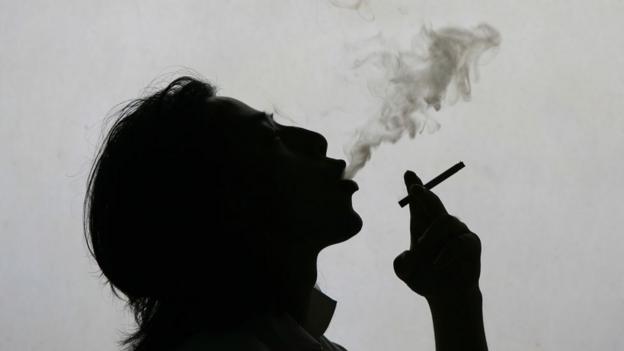
Will we ever… have safe cigarettes?


Will we ever… have safe cigarettes?

Will we ever… have safe cigarettes?
(Copyright: Getty Images)
For decades the tobacco industry has tried to come up with alternatives that people would want to smoke, but this is much harder than you would think. 

There’s an old saying among people who work in public health: Tobacco is the only legal product that, when used as intended, will kill you. Decades of research have thoroughly documented the health problems that result from inhaling tobacco smoke – more than a dozen different types of cancer, heart disease, stroke, emphysema and other respiratory diseases, among others. Are these risks an inevitable part of smoking? Or is there a way of creating safe cigarettes without any of these hazards?
“I think it’s very unlikely,” says Stephen Hecht from the University of Minnesota Cancer Center, who studies tobacco carcinogens – substances that cause cancer. Tobacco smoke is a complex cocktail of at least 4,000 chemicals including at least 70 known carcinogens. No one has made a “cigarette that is significantly decreased in all of these [chemicals] and is still something people would want to smoke, even though the industry has worked on this for around 50 years,” says Hecht. “There’s no indication that it’s possible.”
As Hecht says, it’s not that the industry hasn’t tried. Journalist Will Storr recently documented a history of bungled attempts to create a safer cigarette, from one that passed the carcinogenic smoke through a filter made of another carcinogen – asbestos – to another that heated tobacco rather than burning it, but tasted of sulphur, charcoal, and burning plastic.
The problem is that no single step in the production or consumption process fills cigarette smoke with its dangerous constituents. Some constituents are in the tobacco leaves themselves at the point of harvesting. The plants can absorb metals and metalloids like arsenic and cadmium from fertilisers and the surrounding soil, while sticky hairs on their leaves can gather particles from the air, including radioactive elements like polonium-210.
When the harvested leaves are cured and dried, compounds within them are converted into tobacco-specific nitrosamines (TSNAs), a class of well-known and intensely studied carcinogens. And when the smoker lights up, chemical reactions in the burning leaves fill the smoke with carbon monoxide, hydrogen cyanide and a cocktail of carcinogens – the infamous polycyclic aromatic hydrocarbons (PAHs), and vapour-borne “volatiles” like formaldehyde and benzene. As long as you’re burning plant matter and inhaling the smoke, you’ll get a lungful of carcinogens. “There’s no getting around that fact,” says Neal Benowitz, a pharmacologist from the University of California, San Francisco.
Potent drug
As always with toxicology, it’s the dose that makes the poison, and a laundry list of ingredients is a poor way of assessing a product’s true risk. But it’s clear that many of the substances in cigarette smoke, particularly the well-studied TSNAs, PAHs and volatiles, are found at significant levels in both the smoke and the bodies of smokers who inhale it. And, they cause similar patterns of DNA damage to those seen in actual tumours.
The route of exposure also matters. Many of the chemicals in tobacco smoke are also found in other everyday sources, including foods. But there’s a big difference between taking these substances into your guts, where they pass through a soup of enzymes before being actively transported into the bloodstream, and sucking them directly into your lungs where they can passively diffuse into your blood.
There are some measures that could individually reduce the number of carcinogens in smoke: modifying the blend of tobacco; refining the curing process; including charcoal filters to absorb some of the volatiles; and so on. “But there’s no evidence that this does any good,” says Hecht. None of these measures completely deletes the full spectrum of carcinogens, and Hecht adds, “We tend to focus on the compounds that we know are dangerous, but that’s maybe only a few hundred of the 4,000 that are identified. There could be other things going on that we’re not aware of.”


And then there’s nicotine. This highly addictive drug isn’t a carcinogen, but it’s not entirely benign either. It increases heart rate, constricts blood vessels, and contributes to high levels of cholesterol. There’s some evidence that it could stop cancerous cells from self-destructing or promote the growth of blood vessels that bring oxygen and nutrients to tumours. But both of these claims come from studies in lab-grown cells. “It’s not clear if any of this works in a live animal,” says Hecht. “The big thing [about nicotine] is the addiction.” Nicotine is a potent drug – it’s the one chemical that keeps smokers inhaling all the rest.
Nicotine’s addictive properties have led to some spectacular backfires in attempts to create safer cigarettes. From the 60s and 70s, the tobacco industry marketed “low-tar” cigarettes as safer versions of their normal cousins. These so-called “mild”, “smooth” and “light” alternatives contained tiny vents in their filters, which were meant to allow fresh air to dilute the tar – the collective term for the chemical gunge in smoke.
These cigarettes were tested with machines that, sure enough, measured a lower concentration of tar in the ensuing smoke. But, surprise, people aren’t machines. As the smoke from these brands also contained less nicotine, smokers would get their fix by taking longer drags, smoking more frequently, or simply blocking the filters with their fingers. They ended up inhaling more smoke, and despite the industry’s claims, exposed themselves to the same level of carcinogens.
Safer options?
Smokeless tobacco products fare little better. Even though they are sucked, chewed and sniffed, and never set on fire, they still contain many of the same carcinogens as cigarettes, and have been linked to mouth, oesophageal and pancreatic cancers. The one possible exception is snus, a Swedish product that’s not unlike a “tobacco-stuffed teabag” that you stick under your lips. It’s manufactured according to rigorous standards that limit the amount of nitrosamines in the final product, while still retaining that craving-satisfying nicotine. Snus is billed as the reason for Sweden’s low rates of lung and oral cancers, compared to countries where cigarettes are the dominant tobacco product.
“It’s much safer [than smoked products] but not entirely safe, and there’s a possibility that it still poses a cancer risk,” says Benowitz. Indeed, some recent studies have suggested that snus users have a higher risk of pancreatic cancer, and a higher risk of dying from cancer. “If you simplistically said everyone stopped smoking and used snus, there’d be a tremendous health benefit, but the question is whether they would do that,” says Benowitz. His concerns are that snus could make it harder for active smokers to give up their habit by fuelling nicotine addiction, or act as a gateway drug that entices non-smokers to start. “It’s probably better than smoking, but you probably don’t want to put it in your mouth,” says Hecht.
The same arguments apply to e-cigarettes – battery-powered devices that look like cigarettes, and release a nicotine vapour without any of the accompanying carcinogens. At least, that’s the theory – there’s scant data on what they actually release, and how that varies from brand to brand. An analysis from the US Food and Drug Administration showed that some still contained detectable traces of nitrosamines. “In theory, they could be safer than snus,” says Benowitz. “But there’s been hesitation around them because they are unregulated, so who knows what you’re getting.”
The use of both snus and e-cigarettes will probably remain highly controversial, even after more data comes in. This reflects a tension in public health circles: given smoking is so addictive and damaging, is it acceptable or even ethical to reduce that harm by advocating products that are safer, but still not safe? “If we’d never heard of cigarettes, we’d look at a smokeless tobacco product and say, ‘This thing should be banned’,” says Hecht. In a world where tobacco never existed, these arguments would be moot. But that world does not exist; what do we do in this one?

Source

Monday, November 12, 2012

Vegetative patient Scott Routley says 'I'm not in pain'


Vegetative patient Scott Routley says 'I'm not in pain'


Scott Routley

Related Stories

A Canadian man who was believed to have been in a vegetative state for more than a decade, has been able to tell scientists that he is not in any pain.
It's the first time an uncommunicative, severely brain-injured patient has been able to give answers clinically relevant to their care.
Scott Routley, 39, was asked questions while having his brain activity scanned in an fMRI machine.
His doctor says the discovery means medical textbooks will need rewriting.
Vegetative patients emerge from a coma into a condition where they have periods awake, with their eyes open, but have no perception of themselves or the outside world.
Mr Routley suffered a severe brain injury in a car accident 12 years ago.
None of his physical assessments since then have shown any sign of awareness, or ability to communicate.
But the British neuroscientist Prof Adrian Owen - who led the team at the Brain and Mind Institute, University of Western Ontario - said Mr Routley was clearly not vegetative.

Panorama: Find out more

  • Fergus Walsh presents The Mind Reader: Unlocking My Voice - a Panorama Special
  • BBC One, Tuesday 13 November at 22:35 GMT
"Scott has been able to show he has a conscious, thinking mind. We have scanned him several times and his pattern of brain activity shows he is clearly choosing to answer our questions. We believe he knows who and where he is."
Prof Owen said it was a groundbreaking moment.
"Asking a patient something important to them has been our aim for many years. In future we could ask what we could do to improve their quality of life. It could be simple things like the entertainment we provide or the times of day they are washed and fed."
Scott Routley's parents say they always thought he was conscious and could communicate by lifting a thumb or moving his eyes. But this has never been accepted by medical staff.
Prof Bryan Young at University Hospital, London - Mr Routley's neurologist for a decade - said the scan results overturned all the behavioural assessments that had been made over the years.

FMRI SCANNING

Prof Adrian Owen and team with patient at scanner
  • Functional Magnetic Resonance Imaging measures the real-time activity of the brain by tracking the flow of oxygen-rich blood
  • The patients were repeatedly asked to imagine playing tennis or walking around their home
  • In healthy volunteers each produces a distinct pattern of activity, in the premotor cortex for the first task and the parahippocampal gyrus for the second
  • It allowed the researchers to put a series of yes or no questions to severely brain-injured patients. A minority were able to answer by using the power of thought
  • In 2010 Prof Owen published research showing that nearly one in five of the vegetative patients were able to communicate using brain activity
"I was impressed and amazed that he was able to show these cognitive responses. He had the clinical picture of a typical vegetative patient and showed no spontaneous movements that looked meaningful."
Observational assessments of Mr Routley since he responded in the scanner have continued to suggest he is vegetative. Prof Young said medical textbooks would need to be updated to include Prof Owen's techniques.
The BBC's Panorama programme followed several vegetative and minimally-conscious patients in Britain and Canada for more than a year.
Another Canadian patient, Steven Graham, was able to demonstrate that he had laid down new memories since his brain injury. Mr Graham answers yes when asked whether his sister has a daughter. His niece was born after his car accident five years ago.
The Panorama team also followed three patients at the Royal Hospital for Neuro-disability (RHN) in Putney, which specialises in the rehabilitation of brain-injured patients.
It collaborates with a team of Cambridge University neuroscientists at the Wolfson Brain Imaging Centre at Addenbrooke's hospital, Cambridge.
Panorama's Fergus Walsh meets Professor Adrian Owen to learn what the brain is like when in a vegetative state
One of the patients is diagnosed as vegetative by the RHN, and he is also unable to show awareness in an fMRI machine.
A second patient, who had not been fully assessed by the RHN, is shown to have some limited awareness in brain scans.
The Mind Reader: Unlocking My Voice - a Panorama Special - will be broadcast on Tuesday 13 November at 22:35 on BBC One. Or catch up later on the BBC iPlayer using the link above.

US to become 'world's biggest oil producer'


US to become 'world's biggest oil producer'

Oil fracking operation in North Dakota 
  Shale oil and gas is now big business in the US

Related Stories

The US will overtake Saudi Arabia as the world's biggest oil producer "by around 2020", an International Energy Agency (IEA) report has said.
The IEA said the reason for this was the big growth and development in the US of extracting oil from shale rock.
This has enabled the US to gain significantly more extractable oil resources.
As a result, the IEA predicts the US will become "all but self-sufficient" in its energy needs by around 2035.
The US shale oil industry has grown significantly in recent years.
It extracts oil from the ground using a method called fracking - pumping down a mixture of sand, water and chemicals at high pressure.
The industry says the method is safe, but critics say it could cause earthquakes and pollute water sources.
The IEA predicts that the US will be producing 11.1 million barrels per day by 2020, compared with 10.6 million from Saudi Arabia.
Currently the US imports about 20% of its total energy needs.
The IEA also expects that the US will overtake Russia as the word's biggest gas producer by 2015, again thanks to fracking, which can also be used to extract natural gas.
It warns that the big growth in US oil and gas production could have significant geopolitical implications, as it may make the US less concerned about the Middle East.

Source

Sunday, October 28, 2012

A Point Of View: China and multiculturalism


A Point Of View: China and multiculturalism

Chinese crowd in Beijing waving flags
The vast majority of the Chinese population regard themselves as belonging to the same race, a stark contrast to the multiracial composition of other populous countries. What effect does this have on how China views the world, ask Martin Jacques.
I was on a taxi journey in Shanghai with a very intelligent young Chinese student, who was helping me with interviews and interpreting. She was shortly to study for her doctorate at a top American university. She casually mentioned that some Chinese students who went to the US ended up marrying Americans.
I told her that I had recently seen such a mixed couple in Hong Kong, a Chinese woman with a black American. This was clearly not what she had in mind. Her reaction was a look of revulsion. I was shocked. Why did she react that way to someone black, but not someone white? This was over a decade ago, but I doubt much has changed. What does her response tell us - if anything - about Chinese attitudes towards ethnicity?
China's population is huge.

Find out more

Martin Jacques
  • Martin Jacques is an economist and author of When China Rules the World
  • A Point of View is usually broadcast on Fridays on Radio 4 at 20:50 BST and repeated Sundays, 08:50 BST
What people aren't generally aware of, though, is that more than nine out of 10 Chinese people think of themselves as belonging to just one race, the Han. This is remarkable. It is quite different from the world's other most populous nations: India, United States, Indonesia and Brazil. All recognise themselves to be, in varying degrees, multiracial and multicultural.
True, a country that is the size of a continent has obviously been home to countless different races down the ages. But that is not how the great majority of Chinese see themselves today.
Why is this?
The answer takes us back to the birth of modern China more than 2,000 years ago. China is extremely old - the longest continuously existing country in the world. The eastern half of China - where the vast majority of Chinese live now and lived then - has been more or less united ever since 211BC.
Over that extraordinarily long period - as a result of war, occupation, absorption, assimilation, ethnic cleansing and government resettlement - the sense of difference between the many races that lived in the eastern half of China was slowly eroded.
Fundamental to this process was the gradual emergence of a shared cultural identity.

Han Chinese

  • Trace ancestry back to Huaxia people who lived along northern China's Yellow River
  • Name comes from Han Dynasty that ruled a unified China from 206BC til 220
  • Han have absorbed many ethnic groups, taking on aspects of their culture and language
  • Speak a variety of dialects and even distinct languages, but share a common writing system based on Mandarin
  • Traditional Han beliefs are Confucianism and Daoism
China, along with part of today's Middle East, was home to the first settled agricultural communities in the world. They gradually supplanted nomadic culture and ushered in the beginnings of centralised governance.
Over the last two millennia, China has generally been one of the most advanced, often the most advanced, civilisation in the world. It is hardly surprising that, with a rich history like this, the Chinese have a very powerful sense of their cultural identity.
Every country has its own unique story of ethnicity. Take the US. It starts with arrival of the European settlers and the near extermination of the native American population, to be followed later by large-scale African slavery. Not surprisingly, these experiences have profoundly influenced American attitudes and the country's behaviour as a global power.
How did China evolve? It is essentially the story of the Han and the way in which over a period of two millennia they came to absorb the great majority of other ethnic groups.

Ethnic minorities in China

Ethnic Uyghur grandfather holds child
Of the 55 recognised ethnic minority groups, the 10 largest are:
  • Zhuang (16.9 million)
  • Hui (10.59 million)
  • Manchu (10.39 million)
  • Uyghur (10.07 million)
  • Miao (9.43 million)
  • Yi (8.7 million)
  • Tujia (8.35 million)
  • Tibetan (6.28 million)
  • Mongol (5.98 million)
  • Buyei (2.87 million)
Source: 2010 China census
Before the victory of the Qin dynasty in 221BC, China was divided into many different states. The process of its subsequent unification was the creation of an empire. But whereas all the other great empires of the world have long since broken up, China remains united. Why? In one word - the Han. The Han identity has served as the glue which has kept a geographically and demographically vast country together. Without that shared identity, China would long ago have fallen apart.
The China I have been talking about is the eastern half of present-day China, where more than 90% of the population lives. What then of the western half? This is a different story. It accounts for over half the territory of China but contains only about 6% of its population.
Whereas the eastern half of China dates back about two millennia, the western part is far more recent, having only been incorporated about 300 years ago.
From the mid-17th Century, large tracts of the western region were conquered by the Qing dynasty in a series of brutal wars. The inhabitants of these lands were not Han. With their different physical appearance, darker skin, distinctive customs and lower level of development, the Han saw them as the Other, as "barbarians".
Not surprisingly, the Chinese government, both imperial and communist, has long had a troubled relationship with parts of the western regions, notably Tibet and Xinjiang.
Tibetans protest against Chinese domination
If the strength of the Han identity is that it has held China together, its weakness, I would argue, has been its relative lack of respect for difference, an underlying assumption that the non-Han should become like the Han - indeed eventually be absorbed into the Han. This attitude is not difficult to understand, it is how the Han became almost, but not quite, synonymous with being Chinese, or, to put it another way, how China was created.
Ethnicity is a powerful determinant of how societies perceive others. So is China, as a global power, likely to view the rest of the world?
Just as with the US, China will naturally tend to see the world in its own image. An unusual feature of China, in this respect, is that its history is so atypical: a huge population who overwhelmingly consider themselves to share the same identity. This helps to explain why the Chinese have tended to think of Africa as one, just like China, rather than a complex mosaic of different ethnicities and cultures.
The fact that China has had little experience of, or exposure to, the rest of the world until very recently - the past 30 years to be exact - has served to reinforce a tendency to see other countries through a Chinese prism.
Chinese New Year
Bear in mind, too, that the Chinese have a deep pride in their own cultural achievements, many believing that, for understandable reasons, their civilisation, and their history, is greater than all others. Such an outlook also tends to accentuate a China-centric view of the world.
When I first got to know the Chinese, one of the things I most enjoyed about them was their powerful sense of who they were, their confidence in who they were. They did not defer to white people. I liked that and respected them for it. It was as if their remarkable history resided in each and every one of them and made them walk tall.
Despite the fact that for the best part of two centuries China came to suffer hugely at the hands of the West, and to lag badly behind the West, the Chinese never stopped believing in themselves. Such pride and confidence is to be admired. In my view, though, it can also have a downside - a tendency to look down on others. If the Chinese have always considered themselves to be at least the equal of white Westerners, a common, though by no means universal, attitude has been to regard those of darker skin as inferior.
My horrified student friend was a case in point.
But why is this? Its roots are deep. For many centuries, white has had positive connotations in Chinese culture and black negative ones. Perhaps the reason is that those who toiled all day in the fields became dark while the aristocratic elite, protected from the sun, remained pristine white. To this day, interestingly, skin whitening products are enormously popular amongst Chinese women, as they also are in Japan and Korea and elsewhere.
Didier Drogba helped up by Shanghai Shenhua goalkeeper Dong Guangxiang Didier Drogba now plays in Shanghai
Over the past two centuries, the Chinese have been hugely aware of the fact that white societies around the globe have been dominant while those of colour, especially African, have been poorer and much less developed. Success breeds respect, failure can all too easily attract scorn. Remember, those of African descent, until the past few decades, have been remote and distant from the Chinese, far removed from their knowledge and experience, a situation which can foster ignorance and prejudice.
There are small signs of change.
Didier Drogba, the Ivory Coast footballer who now plays for Shanghai Shenhua, has spoken in glowing terms about how the Chinese have received him.
As China becomes increasingly familiar with the world - as is now happening in such a dramatic way, from Africa to Latin America, and South Asia to Central Asia - parochial if deep-seated prejudices will come under growing pressure.

Source