Showing posts with label Taxes. Show all posts

Thursday, February 23, 2012

Barack Obama seeks to change US corporate tax code

Barack Obama seeks to change US corporate tax code

Barack Obama addresses the audience at the White House, Washington, DC 21 February 2012.
The US president has seen recent success on extending the payroll tax cut

Related Stories

US President Barack Obama is proposing cutting the US corporate tax rate from 35% to 28%, and closing loopholes, as part of a larger push for tax reform.

Announcing the plan, the US treasury secretary called the tax code loopholes "fundamentally unfair".

Republicans also propose lowering rates, but Mr Obama's plan is thought to have few chances of becoming law.

Correspondents say the president is using the plan to spark a debate on tax reform in an election year.

The plan does not include any overhaul of the individual tax code.

"Our current corporate tax system is outdated, unfair, and inefficient," Mr Obama said in a statement.

"It is unnecessarily complicated and forces America's small businesses to spend countless hours and dollars filing their taxes."

Treasury Secretary Timothy Geithner also called the current system inefficient, describing it as bad for job-creation.

He said the White House and Treasury plan would make the tax system more globally competitive and eliminate "fundamentally unfair" loopholes.

"We want to restore a system in which American businesses succeed or fail based on the products they make and the services they provide, not on the creativity of their tax engineers or the lobbyists they hire."

Loophole tax rate

The US currently has one of the top corporate tax rates in the world, but loopholes and other subsidies mean many companies pay a much lower effective tax rate.

According to the Congressional Budget Office, total corporate federal taxes represented 12.1% of US profits in 2011.

US media analysis

Washington Post's Wonkbook argues the plan is a challenge to businesses who have called for reform: "In a sense, their document is as much about showing how hard corporate tax reform will be as it is about getting corporate tax reform done."

Fox Business's Elizabeth MacDonald says that under the White House's plan, business such as utilities and car manufacturers would benefit, while the internet and biotech sectors could see higher taxes.

Writing in the National Review, Douglas Holtz-Eakin says: "Credit where credit is due," but adds that the rate is not competitive enough and that a minimum tax on foreign profits puts the US "out of step" with other developed countries.

Republican Representative Dave Camp and presidential hopeful Mitt Romney have proposed a 25% rate, while other Republican candidates have suggested rates as low as 12.5%.

While both parties have expressed interest in removing tax loopholes, there is disagreement on which subsidies will be need to be cut in order to make up for revenues lost through lowering the standard rate.

Removing the tax loopholes would be likely to raise tax revenues overall, with some companies paying more or less under the current system.

As part of the proposed plan, Mr Obama has suggested lowering the tax rate to 25% for manufacturing businesses and continuing research and development-based tax credits.

While the announcement fleshes out promises made in Mr Obama's January State of the Union address, it leaves certain key details, like the percentage of a minimum tax on foreign profits, up to Congress.

Correspondents say that the tax proposal - and the deliberate lack of detail in some areas - is a move by Mr Obama to shift responsibility to Congress.

Republicans in the House of Representatives have routinely opposed Mr Obama's legislative plans since winning control of the chamber in the 2010 elections.

Source

Wednesday, January 11, 2012

Warren Buffett Ready to Take Republicans’ Tax Challenge

Warren Buffett Ready to Take Republicans’ Tax Challenge


Mark Seliger for TIME

Updated, 6:10 p.m. E.T.

Warren Buffett is ready to call Republicans’ tax bluff. Last fall, Senator Mitch McConnell said that if Buffett were feeling “guilty” about paying too little in taxes, he should “send in a check.” The jab was in response to Buffett’s August 2011 New York Times op-ed, which made hay of the fact that our tax system is so unbalanced, Buffett (worth about $45 billion) pays a lower tax rate than his secretary. Senator John Thune promptly introduced the “Buffett Rule Act,” an option on tax forms that would allow the rich to donate more in taxes to help pay down the national debt. It was, as Buffett told me for this week’s TIME cover story, “a tax policy only a Republican could come up with.”

Still, he’s willing to take them up on it. “It restores my faith in human nature to think that there are people who have been around Washington all this time and are not yet so cynical as to think that [the deficit] can’t be solved by voluntary contributions,” he says with a chuckle. So Buffett has pledged to match 1 for 1 all such voluntary contributions made by Republican members of Congress. “And I’ll even go 3 for 1 for McConnell,” he says. That could be quite a bill if McConnell takes the challenge; after all, the Senator is worth at least $10 million. As Buffett put it to me, “I’m not worried.” (See below for a statement from McConnell’s office.)

Listen to Buffett’s retort to McConnell’s contribution theory:

(PHOTOS: The Life and Career of Warren Buffett)

Buffett doesn’t want to sound ungrateful, especially since McConnell and other Republicans have lobbied to keep taxes low for the über-rich, saving him between $6 million and $7 million this year. Oddly, though, conservatives can’t seem to make up their mind about taxes. On Wednesday in the Wall Street Journal, supply sider Arthur Laffer bashed Buffett for, among other things, shielded income, because he doesn’t pay taxes on unrealized capital gains (currently taxed at 0%) or charitable contributions (which are tax deductible). “Well, I had a net unrealized loss in 2011,” says Buffett. “But if Arthur has a plan for how he wants to tax unrealized capital gains, I’d love to hear it — it’s an interesting thing for a Republican to put forward!”

If Buffett had his way, he’d pay more than the 17% rate he currently forks over on his net adjusted income — and he’d have the government put that additional money to work by making sure that whatever portion of the 99% that isn’t thriving in the market economy gets some help. As Buffett wrote in Fortune a few years back, “I’ve worked in an economy that rewards someone who saves the lives of others on a battlefield with a medal, rewards a great teacher with thank-you notes from parents, but rewards those who can detect the mispricing of securities with sums reaching into the billions.”

Listen to Buffett discuss why a capitalist system should take care of good citizens:

(PHOTOS: The Berkshire Hathaway Annual Shareholders’ Meeting)

Buffett doesn’t want to hobble capitalism. He just wants to give it a heart. And he says the way to do that is to change our tax policy to ensure that people who earn their money from investments rather than by working for a paycheck contribute their fair share. “We need a tax system that takes very good care of people who just really aren’t as well adapted to the market system and to capitalism but are nevertheless just as good citizens and are doing things that are of use in society.” Note to bond traders: your higher taxes should help subsidize the building of bridges and the running of state-sponsored day-care centers.

Buffett has plenty of other prescriptions for America — from more progressive consumption taxes to penalties for errant corporate directors to an overhaul of health care. He’s also got a few choice words for the Republican field and their ideas about bootstrapping and “merit” economies: “This whole business about [Newt] Gingrich going down to Occupy and saying, ‘They ought to be getting a job,’ that’s just … you know, maybe they can be historians for Freddie Mac too and make $600,000 a year.” When I ask whether Mitt Romney is a job creator or destroyer, Buffett says that while businesses shouldn’t keep people they don’t need, “I don’t like what private-equity firms do in terms of taking out every dime they can and leveraging [companies] up so that they really aren’t equipped, in some cases, for the future.”

(SPECIAL: See Warren Buffett in TIME’s List of the People Who Mattered in 2011)

Listen to Buffett explain why education can’t solve all the U.S.’s problems:

Despite Buffett’s disenchantment with conservatives and partisan politics, he’s more than ever a bull on America’s future. What would Warren do to get the U.S. back on track? Read TIME’s cover story this week, available Thursday morning online and Friday on newsstands, to find out.

Listen to Buffett talk about why housing will bounce back:

(MORE: What Politicians Have to Lose — and Gain — from the “Buffett Rule”)

Listen to Buffett discuss the tensions between the U.S. and China:

UPDATE: Don Stewart, a spokesman for Senator McConnell, provided the following response to Buffett’s remarks:

Sen. McConnell says that Washington should be smaller, rather than taxes getting bigger. And since some, like President Obama and Mr. Buffett, want to pay higher taxes, Congress made it possible for them to call their own bluff and send in a check. So I look forward to Mr. Buffett matching a healthy batch of checks from those who actually want to pay higher taxes, including Congressional Democrats, the President and the DNC.

Saturday, October 1, 2011

Campagin Finance Reform #1 Goal


Saturday, September 17, 2011

Mayor Bloomberg predicts riots in the streets if economy doesn't create more jobs

Mayor Bloomberg predicts riots in the streets if economy doesn't create more jobs

Mayor Bloomberg is sounding the alarm bell over the nation's struggling economy.
Spencer Platt/Getty
Mayor Bloomberg is sounding the alarm bell over the nation's struggling economy.

By Erin Einhorn and Corky Siemaszko
DAILY NEWS STAFF WRITER

Mayor Bloomberg warned Friday there would be riots in the streets if Washington doesn't get serious about generating jobs.

"We have a lot of kids graduating college, can't find jobs," Bloomberg said on his weekly WOR radio show.

"That's what happened in Cairo. That's what happened in Madrid. You don't want those kinds of riots here."

In Cairo, angry Egyptians took out their frustrations by toppling presidential strongman Hosni Mubarak - and more recently attacking the Israeli embassy.

As for Madrid, the most recent street protests were sparked by widespread unhappiness that the Spanish government was spending millions on the visit of Pope Benedict instead of dealing with widespread unemployment.

Bloomberg's unusually alarmist pronouncement came as President Obama has been pressuring reluctant Republicans to pass his proposed job creation plan.

"The damage to a generation that can't find jobs will go on for many, many years," the normally-measured mayor said.

Bloomberg gave Obama kudos for coming up with a jobs plan.

"At least he's got some ideas on the table, whether you like those or not," he said. "Now everybody's got to sit down and say we're actually gonna do something and you have to do something on both the revenue and the expense side."

And everybody's got to share in the pain.


The streets of Cairo erupted in violence this spring. (AP Photo)

"When you start picking and choosing which groups do and do not, that's when it becomes unfair in a lot of people's minds," the mayor said. "But we're all in this together."

Obama didn't create this economic mess, it developed "over long periods of time," Bloomberg said.

Obama's approval rating has sunk along with the economy, but the ratings of the Republicans who have stymied his attempts repair the damage are even worse, most polls show.

Already, House Speaker John Boehner, an Ohio Republican, has drawn a line on raising taxes on the rich to pay for Obama's proposed $447 billion jobs plan, which aims to help the middle class.

csiemaszko@nydailynews.com


Wednesday, September 14, 2011

"If I Was Running America..." Richard Branson Explains What He Would Do About The Job Market

"If I Was Running America..." Richard Branson Explains What He Would Do About The Job Market


Commentary

Do you know what talking points are?

Talking points are put in place to help anchors or people in general, push a particular message in a particular way.

Talking points are the opposite of truth and open dialog.

Talking points shut the process of listening and discussion, into blabbering random facts in a biased way.

Kudlow, the ANCHOR of this show, is OBVIOUSLY blurting talking points.

Richard brandson says one thing, and Kudlow completely says something different.

Branson NEVER EVEN USED the word Taxes, and YET Kudlow says it...

It's pathetic how anchors today can't even have a simple conversation without using talking points.

This is obvious media manipulation. At least Richard brandson gave him the truth and he seemed taken aback by it.

Thursday, August 18, 2011

Stop Coddling the Super-Rich

Stop Coddling the Super-Rich

Kelly Blair

OUR leaders have asked for “shared sacrifice.” But when they did the asking, they spared me. I checked with my mega-rich friends to learn what pain they were expecting. They, too, were left untouched.

While the poor and middle class fight for us in Afghanistan, and while most Americans struggle to make ends meet, we mega-rich continue to get our extraordinary tax breaks. Some of us are investment managers who earn billions from our daily labors but are allowed to classify our income as “carried interest,” thereby getting a bargain 15 percent tax rate. Others own stock index futures for 10 minutes and have 60 percent of their gain taxed at 15 percent, as if they’d been long-term investors.

These and other blessings are showered upon us by legislators in Washington who feel compelled to protect us, much as if we were spotted owls or some other endangered species. It’s nice to have friends in high places.

Last year my federal tax bill — the income tax I paid, as well as payroll taxes paid by me and on my behalf — was $6,938,744. That sounds like a lot of money. But what I paid was only 17.4 percent of my taxable income — and that’s actually a lower percentage than was paid by any of the other 20 people in our office. Their tax burdens ranged from 33 percent to 41 percent and averaged 36 percent.

If you make money with money, as some of my super-rich friends do, your percentage may be a bit lower than mine. But if you earn money from a job, your percentage will surely exceed mine — most likely by a lot.

To understand why, you need to examine the sources of government revenue. Last year about 80 percent of these revenues came from personal income taxes and payroll taxes. The mega-rich pay income taxes at a rate of 15 percent on most of their earnings but pay practically nothing in payroll taxes. It’s a different story for the middle class: typically, they fall into the 15 percent and 25 percent income tax brackets, and then are hit with heavy payroll taxes to boot.

Back in the 1980s and 1990s, tax rates for the rich were far higher, and my percentage rate was in the middle of the pack. According to a theory I sometimes hear, I should have thrown a fit and refused to invest because of the elevated tax rates on capital gains and dividends.

I didn’t refuse, nor did others. I have worked with investors for 60 years and I have yet to see anyone — not even when capital gains rates were 39.9 percent in 1976-77 — shy away from a sensible investment because of the tax rate on the potential gain. People invest to make money, and potential taxes have never scared them off. And to those who argue that higher rates hurt job creation, I would note that a net of nearly 40 million jobs were added between 1980 and 2000. You know what’s happened since then: lower tax rates and far lower job creation.

Since 1992, the I.R.S. has compiled data from the returns of the 400 Americans reporting the largest income. In 1992, the top 400 had aggregate taxable income of $16.9 billion and paid federal taxes of 29.2 percent on that sum. In 2008, the aggregate income of the highest 400 had soared to $90.9 billion — a staggering $227.4 million on average — but the rate paid had fallen to 21.5 percent.

The taxes I refer to here include only federal income tax, but you can be sure that any payroll tax for the 400 was inconsequential compared to income. In fact, 88 of the 400 in 2008 reported no wages at all, though every one of them reported capital gains. Some of my brethren may shun work but they all like to invest. (I can relate to that.)

I know well many of the mega-rich and, by and large, they are very decent people. They love America and appreciate the opportunity this country has given them. Many have joined the Giving Pledge, promising to give most of their wealth to philanthropy. Most wouldn’t mind being told to pay more in taxes as well, particularly when so many of their fellow citizens are truly suffering.

Twelve members of Congress will soon take on the crucial job of rearranging our country’s finances. They’ve been instructed to devise a plan that reduces the 10-year deficit by at least $1.5 trillion. It’s vital, however, that they achieve far more than that. Americans are rapidly losing faith in the ability of Congress to deal with our country’s fiscal problems. Only action that is immediate, real and very substantial will prevent that doubt from morphing into hopelessness. That feeling can create its own reality.

Job one for the 12 is to pare down some future promises that even a rich America can’t fulfill. Big money must be saved here. The 12 should then turn to the issue of revenues. I would leave rates for 99.7 percent of taxpayers unchanged and continue the current 2-percentage-point reduction in the employee contribution to the payroll tax. This cut helps the poor and the middle class, who need every break they can get.

But for those making more than $1 million — there were 236,883 such households in 2009 — I would raise rates immediately on taxable income in excess of $1 million, including, of course, dividends and capital gains. And for those who make $10 million or more — there were 8,274 in 2009 — I would suggest an additional increase in rate.

My friends and I have been coddled long enough by a billionaire-friendly Congress. It’s time for our government to get serious about shared sacrifice.

Source

Monday, August 15, 2011

Warren Buffett demands to pay more tax

Warren Buffett demands to pay more tax

Warren Buffett
Mr Buffett said he had never known anyone to shy away from an investment because of high taxes

Related Stories

Warren Buffett has called for Congress to make him and his "mega-rich friends" pay more income tax.

In a piece in the left-leaning New York Times, the billionaire investor and philanthropist said the rich should do more to help plug the deficit.

He called for a tax rise for those earning more than $1m (£600,000), and a higher rate for those on over $10m.

In a rebuttal of arguments made by Republicans, he said tax rises would not hurt investment or jobs in the US.

He told Congress to "stop coddling the super-rich".

"Our leaders have asked for 'shared sacrifice'," he wrote. "But when they did the asking, they spared me."

Challenge to Congress

Mr Buffett explained that, like many top earners, his income came entirely from investments rather than from employment, which are subject to lower taxes in the US.

He said last year he paid an effective tax rate of 17.4%, less than the 33% to 41% paid by the employees in his office.

He dismissed arguments made by senior Republicans, including House majority leader John Boehner, that taxing higher earners more would damage investment and job creation in the US.

"I have yet to see anyone... shy away from a sensible investment because of the tax rate on the potential gains," he said.

He pointed out that the effective tax rate paid by the highest earners was much higher in the 1980s and 1990s than in the last decade, and yet job creation was much higher in the earlier decades.

His proposed tax rises would not affect 99.7% of taxpayers, he claimed, adding that a 2% payroll tax cut passed in December should stay in place to help the poor and middle classes.

However, Mr Buffett also set a challenge for the Democrats who are set to form a special Congressional committee with Republicans to agree $1.5tn in budget savings.

He said "job one for the 12 [committee members] is to pare down some future promises that even a rich American can't fulfil".

While Republicans have been implacably opposed to tax rises, Democrats have been loathe to cut healthcare and social security benefits that some economists claim will become unaffordable as Americans live longer and baby-boomers retire.

Source

Wednesday, August 3, 2011

Debt ceiling resolution


Cuts for the Poor, no tax raises.

Essentially this is a slap in the face to Shared Sacrifice.

What has happened to the equity and fair treatment of all people?

Thursday, July 28, 2011

Proof of America's low Taxes -- Evidence Shames T.E.A party (Taxed enough already Party)

Low taxes, high health costs make US choices tough

Posted: Jul 27, 2011 4:41 AM PDT Updated: Jul 27, 2011 7:51 AM PDT
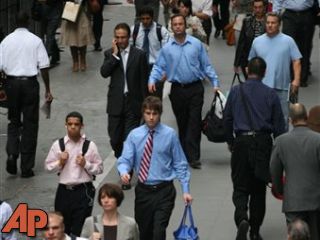
People walk to work on Wall St., in New York. (AP Photo/Mark Lennihan, file)
By PAUL WISEMAN
AP Economics Writer

WASHINGTON (AP) - Wealthy countries all over the world are dealing with debts and strained budgets as they mop up after the Great Recession and brace for the budget-busting retirement of the baby boomer generation.

But the United States is in a bigger fix than almost anyone else.

The U.S. federal debt was equal to 95 percent of the overall economy in the first three months of 2011, the fifth-highest on the Associated Press Global Economy Tracker, an analysis of economic and financial data from 30 of the biggest economies.

Every year that the U.S. government spends more than it collects in taxes, it records an annual budget deficit. The $14.3 trillion debt is the sum of all annual deficits and surpluses.

As U.S. policymakers argue over raising the federal borrowing limit and slashing debts, America is hobbled in ways the others are not. Tax collections are low by historical and international standards. Health care costs are astronomical - and still rising. The political system is gridlocked.

Those problems suggest the current impasse over raising the U.S. government's borrowing limit and cutting the deficit is a prelude to even more intense political combat.

"We as a society will either have to pay more for our government, accept less in government services and benefits, or both," says Douglas Elmendorf, director of the nonpartisan Congressional Budget Office. "For many people, none of those choices is appealing - but they cannot be avoided for very long."

This year's federal tax revenues are forecast to equal 14.4 percent of gross domestic product, a broad measure of economic output, according to the Office of Management and Budget.

That's the lowest share since 1950, long before Congress approved expensive programs such as Medicare. Tax collections have been reduced by the recession and by tax cuts enacted in 2001 and 2003. Among 29 countries ranked by the Organization for Economic Development and Cooperation, only Japan and Spain take in less tax revenue than the U.S. as a percentage of GDP.

When it comes to health care, the U.S. spends the equivalent of 17.4 percent of its GDP - by far the highest percentage among wealthy nations. The next highest is the Netherlands, where health care spending equals 12 percent of GDP. Among the 34 wealthy countries that belong to the OECD, health care spending averages less than 9.5 percent of GDP.

Political gridlock magnifies America's debt woes. Among the five biggest countries with a top AAA rating from the credit rating agency Moody's, the U.S. is the only one that hasn't come up with a serious plan to control government debt, says Moody's sovereign debt analyst, Steven Hess.

The U.S. is also the only one of the five that doesn't have a parliamentary system, which allows the ruling party or coalition to pass its agenda undeterred by the opposition. After taking control last year in Britain, for instance, a coalition led by the Conservative Party enacted an austerity program of tax hikes and spending cuts.

The U.S. has a divided government - Democrats control the White House and Republicans control half of Congress. The effort to narrow annual budget deficits and reduce the debt has bogged down in partisan wrangling.

The AP Global Economy Tracker found most of the wealthy nations of the world struggling with high debt:

- Japan, which is aging rapidly and has endured more than a decade of economic stagnation, had the heaviest debt burden at the end of the first quarter: 244 percent of GDP. Economists Kenneth Rogoff of Harvard University and Carmen Reinhart of the Peterson Institute for International Economics say anything above 90 percent starts to weigh down economic growth partly by pushing up interest rates. Greece's debt was at 161 percent, Italy's 113 percent, Thailand's 111 percent and the United States' 95 percent.

- Energy-producing Canada and Norway had some of the lowest debt burdens among wealthy nations at 32 and 31 percent, respectively. The Norwegian government's finances are so strong that it issues debt mainly to ensure it has a functioning debt market and turns a profit by investing the money it borrows, says Nikola Swann, an analyst at credit rating agency Standard & Poor's.

- Fast-growing developing countries have a big advantage over rich countries when it comes to containing debts. They have younger populations and aren't facing a baby boomer retirement crunch. Brazil (28 percent) and Mexico (27 percent) had light debt burdens relative to GDP.

The U.S. does have a couple of advantages over other rich countries that help it hang onto its top credit rating even as its debts rise and political squabbling over the federal borrowing limit raises the risk of default.

Thanks to a relatively high birth rate and an even higher rate of immigration, the U.S. is aging more slowly than other rich countries. It will have a higher percentage of people working over the next few decades than Europe and Japan. Those workers will pay taxes to finance health care and pension benefits for baby boomers.

Last year, the U.S. had four active workers for every retiree; by 2050, with baby boomers out of the labor force, it will have only two, according to an S&P report on the fiscal impact of aging populations on rich countries. But the countries that are aging fastest - Japan and Italy - will have it much worse. An even split between workers and retirees will put enormous strains on their pensions and health care budgets.

Another U.S. advantage: The federal government's debts are all in U.S. dollars, giving America control of its destiny compared with countries that have to pay back debts in another country's currency. The U.S., for instance, can print dollars, driving down the value of the currency. That would make it cheaper to pay back its debts. It would also boost the economy and tax revenue by making American products cheaper around the world and luring foreign investors who build plants and buy real estate.

Cash-strapped Greece, by contrast, is tethered to a common European currency, the euro, and can't take advantage of a weaker currency. It's even worse for countries that owe money in another currency. Their debt payments go up if a currency they have borrowed in rises in value against their own.

Foreigners also like to own dollars, especially in times of crisis. That allows the U.S. Treasury to issue debt at low interest rates.

The U.S. debt burden isn't quite as heavy as it looks at first, either. The federal debt - $14.3 trillion - includes money the government has borrowed from itself, mostly revenue from Social Security. Take out the borrowing between government agencies and Uncle Sam's net debt drops to $9.8 trillion, or about 64 percent of GDP.

Some debt analysts consider Australia a model for the way it has controlled its budget and prepared to pay for an aging society. Over the last two decades, Australia cut government spending, imposed a 10 percent tax on most goods and services and sold off state assets including airports and railways. It also prepared to cope with an aging society by requiring employers to contribute toward a pension fund.

As a result, the Australian government's debts were equal to 14 percent at the end of the first quarter, lowest on AP's Global Economy Tracker.

Copyright 2011 The Associated Press. All rights reserved. This material may not be published, broadcast, rewritten or redistributed.

Source

~~~~~~~~~~~~~~~~~~~~~~

Center for American Progress Data

~~~~~~~~~~~~~~~~~~~~~~

This fact may not sit well: Americans are under-taxed

Kevin G. Hall | McClatchy Newspapers

last updated: July 12, 2011 06:46:19 AM

WASHINGTON — Here's a dirty little secret that most Americans don't want to hear: We're under-taxed.

That may sound like heresy; nobody wants to pay more taxes. But by historical standards, what we pay in federal taxes — rich, poor and everyone in between — has gone down.

At a time when Washington is wrestling with how to end federal budget deficits and trim the national debt — huge questions that are expected to dominate the nation's politics through the 2012 elections — the fact that Americans are under-taxed compared with U.S. historic norms is central to the discussion.

This fact is separate from the politically charged questions of whether government spends too much, the fairness of who pays how much and what we value or don't in government spending. It's simply that our tax burden is low in the long view of U.S. history, and there are many ways to measure that central truth.

One way is to look at the trend of total federal revenues, 81 percent of which come from income and payroll taxes, 9 percent from corporate taxes, 3.5 percent from excise taxes and 6.5 percent from other sources, according to the Office of Management and Budget.

The post-World War II historic average is that federal revenues equal about 18 percent of the U.S. gross domestic product, the broadest measure of annual economic production. In the year 2000, after the longest economic expansion in U.S. history, federal revenues equaled almost 21 percent of the economy. As a result, Washington cut taxes in 2001 and 2003.

Revenues plunged to around 15 percent of the economy in 2009 and 2010 amid the deep financial crisis, and dipped even further this year, to 14.4 percent, the lowest level since 1950.

Meanwhile, federal spending soared this year to 25.3 percent of the GDP, the highest since 1945, the last year of World War II.

The difference between spending and revenue yielded the federal budget deficit: $1.6 trillion this year, the highest ever.

Don't like that tax measure? Here's another:

Americans across all income classes paid lower effective tax rates in 2007, the last year of complete Internal Revenue Service data, than they did in 2000. The effective tax rate is what people pay after all exemptions and deductions. This is according to the most recent comprehensive look at taxes by the nonpartisan Congressional Budget Office.

The highest 20 percent of tax filers saw their total average federal effective tax rate fall from 28 percent in 2000 to 25.1 percent in 2007, according to the CBO. That's considerably lower than the current top marginal tax rate of 35 percent, and lower than the 27.5 percent effective rate in 1979, the first year that CBO data are available.

For the wealthiest 1 percent of filers, the effective tax rate fell from 33 percent in 2000 to 29.5 percent in 2007. The poorest 20 percent of filers saw their effective rate fall from 6.4 percent to 4 percent.

That's not to say the wealthy don't pay taxes — the top 1 percent paid 39.5 percent of all U.S. income taxes in 2007 — but taxes take a smaller share of their wealth today than historic post-World War II norms.

"They've been coming down for everybody, but we're taking more income at the top. Even if their rates are lower than they used to be, you are applying those lower rates to much larger income," said Roberton Williams, a senior fellow at the nonpartisan Tax Policy Center who spent 22 years as a CBO tax and income analyst. "The share of revenue being paid at the top end rises as their income rises too. But looking at the trend in effective rates, the rate has come down" for all income groups.

The CBO data are instructive because 2007 was the last year before the U.S. economy slipped into recession and nearly crashed. Comparing with 2000 is equally instructive because it's the final full year before the Bush-era tax cuts. They became the Obama tax cuts last December when he agreed to extend them until Dec. 31, 2012.

"It's hard to argue that we're overtaxed, and we're low by world standards," said David Wyss, the chief economist for the New York ratings agency Standard & Poor's.

Joseph Thorndike, a tax historian and visiting professor at the University of Virginia, concurred that Americans are "under-taxed relative to historical averages." However, he cautioned that what Americans pay in taxes can't be seen in isolation from what their government is spending.

"I think it's half of the discussion," he said. In his view, the high level of today's deficits and debt dictates two responses: Federal spending must fall and taxes must rise.

"The hard reality that people should be alerted to is these taxes are going up. They have fallen for most of us to varying degrees, but it is hard to imagine a scenario where they don't all go up."

Still doubtful?

There's yet another way to gauge the tax burden, using data from the Commerce Department's Bureau of Economic Analysis that go back to 1929. The bureau's data on personal income make it possible to guess roughly what portion of income goes to the taxman.

Under this calculation Americans on average saw 17.3 percent of their income go to federal taxes in 2009 and 2010. The last time the percentage was this low was 1975, and during the late 1960s.

If you exclude social insurance taxes on wages — for Medicare and Social Security — the share of taxes as a percentage of income drops to 9.4 percent in 2009 and 9.3 percent in 2010, the lowest since 1950.

The overall tax burden rose sharply in the late 1960s, as Americans began paying for Medicare, which was created in 1965. The burden rose again in 1983 with an increase in tax for Social Security. And tax revenue reached record levels in the late 1990s because the economy was booming and people moved up the tax ladder as they grew wealthier.

Whatever the facts, however, Americans think they're overtaxed, and polls show that they've thought that to be true for more than 50 years.

The American Enterprise Institute, a conservative research center, in April updated its report on "Public Opinion on Taxes: 1937 to Today."

Never have more than 3 percent of Americans thought their taxes were too low, the institute's poll research shows. And never have more than half of Americans considered their taxes "about right," although in 2003 that was the answer for exactly 50 percent of respondents to a Gallup poll.

For most of the period between 1980 and 2000, more than 60 percent of poll respondents thought their taxes were too high. This number dropped sharply beginning in 2003 — perhaps partly because tax rates also declined — falling to less than half of respondents for most years since then. It was 48 percent in a Gallup poll in April 2010.

Why do so many people think their taxes are too high, in good times and bad?

"I think people see a real disconnect between what they pay in and what they get out. We pay a lot for defense, yet we don't have a tangible sense of what we actually spend in Afghanistan or Iraq. Almost half of unemployment insurance recipients say they've never benefited from a government program," said Andrew Fieldhouse, an economist with the liberal Economic Policy Institute.

Source

~~~~~~~~~~~~~~~~~~~~~~

Low taxes, high health costs make US choices tough

WASHINGTON (AP) — Wealthy countries all over the world are dealing with debts and strained budgets as they mop up after the Great Recession and brace for the budget-busting retirement of the baby boomer generation.

But the United States is in a bigger fix than almost anyone else.

The U.S. federal debt was equal to 95 percent of the overall economy in the first three months of 2011, the fifth-highest on the Associated Press Global Economy Tracker, an analysis of economic and financial data from 30 of the biggest economies.

Every year that the U.S. government spends more than it collects in taxes, it records an annual budget deficit. The $14.3 trillion debt is the sum of all annual deficits and surpluses.

As U.S. policymakers argue over raising the federal borrowing limit and slashing debts, America is hobbled in ways the others are not. Tax collections are low by historical and international standards. Health care costs are astronomical — and still rising. The political system is gridlocked.

Those problems suggest the current impasse over raising the U.S. government's borrowing limit and cutting the deficit is a prelude to even more intense political combat.

"We as a society will either have to pay more for our government, accept less in government services and benefits, or both," says Douglas Elmendorf, director of the nonpartisan Congressional Budget Office. "For many people, none of those choices is appealing — but they cannot be avoided for very long."

This year's federal tax revenues are forecast to equal 14.4 percent of gross domestic product, a broad measure of economic output, according to the Office of Management and Budget.

That's the lowest share since 1950, long before Congress approved expensive programs such as Medicare. Tax collections have been reduced by the recession and by tax cuts enacted in 2001 and 2003. Among 29 countries ranked by the Organization for Economic Development and Cooperation, only Japan and Spain take in less tax revenue than the U.S. as a percentage of GDP.

When it comes to health care, the U.S. spends the equivalent of 17.4 percent of its GDP — by far the highest percentage among wealthy nations. The next highest is the Netherlands, where health care spending equals 12 percent of GDP. Among the 34 wealthy countries that belong to the OECD, health care spending averages less than 9.5 percent of GDP.

Political gridlock magnifies America's debt woes. Among the five biggest countries with a top AAA rating from the credit rating agency Moody's, the U.S. is the only one that hasn't come up with a serious plan to control government debt, says Moody's sovereign debt analyst, Steven Hess.

The U.S. is also the only one of the five that doesn't have a parliamentary system, which allows the ruling party or coalition to pass its agenda undeterred by the opposition. After taking control last year in Britain, for instance, a coalition led by the Conservative Party enacted an austerity program of tax hikes and spending cuts.

The U.S. has a divided government — Democrats control the White House and Republicans control half of Congress. The effort to narrow annual budget deficits and reduce the debt has bogged down in partisan wrangling.

The AP Global Economy Tracker found most of the wealthy nations of the world struggling with high debt:

— Japan, which is aging rapidly and has endured more than a decade of economic stagnation, had the heaviest debt burden at the end of the first quarter: 244 percent of GDP. Economists Kenneth Rogoff of Harvard University and Carmen Reinhart of the Peterson Institute for International Economics say anything above 90 percent starts to weigh down economic growth partly by pushing up interest rates. Greece's debt was at 161 percent, Italy's 113 percent, Thailand's 111 percent and the United States' 95 percent.

— Energy-producing Canada and Norway had some of the lowest debt burdens among wealthy nations at 32 and 31 percent, respectively. The Norwegian government's finances are so strong that it issues debt mainly to ensure it has a functioning debt market and turns a profit by investing the money it borrows, says Nikola Swann, an analyst at credit rating agency Standard & Poor's.

— Fast-growing developing countries have a big advantage over rich countries when it comes to containing debts. They have younger populations and aren't facing a baby boomer retirement crunch. Brazil (28 percent) and Mexico (27 percent) had light debt burdens relative to GDP.

The U.S. does have a couple of advantages over other rich countries that help it hang onto its top credit rating even as its debts rise and political squabbling over the federal borrowing limit raises the risk of default.

Thanks to a relatively high birth rate and an even higher rate of immigration, the U.S. is aging more slowly than other rich countries. It will have a higher percentage of people working over the next few decades than Europe and Japan. Those workers will pay taxes to finance health care and pension benefits for baby boomers.

Last year, the U.S. had four active workers for every retiree; by 2050, with baby boomers out of the labor force, it will have only two, according to an S&P report on the fiscal impact of aging populations on rich countries. But the countries that are aging fastest — Japan and Italy — will have it much worse. An even split between workers and retirees will put enormous strains on their pensions and health care budgets.

Another U.S. advantage: The federal government's debts are all in U.S. dollars, giving America control of its destiny compared with countries that have to pay back debts in another country's currency. The U.S., for instance, can print dollars, driving down the value of the currency. That would make it cheaper to pay back its debts. It would also boost the economy and tax revenue by making American products cheaper around the world and luring foreign investors who build plants and buy real estate.

Cash-strapped Greece, by contrast, is tethered to a common European currency, the euro, and can't take advantage of a weaker currency. It's even worse for countries that owe money in another currency. Their debt payments go up if a currency they have borrowed in rises in value against their own.

Foreigners also like to own dollars, especially in times of crisis. That allows the U.S. Treasury to issue debt at low interest rates.

The U.S. debt burden isn't quite as heavy as it looks at first, either. The federal debt — $14.3 trillion — includes money the government has borrowed from itself, mostly revenue from Social Security. Take out the borrowing between government agencies and Uncle Sam's net debt drops to $9.8 trillion, or about 64 percent of GDP.

Some debt analysts consider Australia a model for the way it has controlled its budget and prepared to pay for an aging society. Over the last two decades, Australia cut government spending, imposed a 10 percent tax on most goods and services and sold off state assets including airports and railways. It also prepared to cope with an aging society by requiring employers to contribute toward a pension fund.

As a result, the Australian government's debts were equal to 14 percent at the end of the first quarter, lowest on AP's Global Economy Tracker.

Source

Wednesday, May 11, 2011

Why are Americans so angry about petrol prices?

Why are Americans so angry about petrol prices?


Petrol pump

Rising petrol prices in the US are expected to be one of the key issues in the 2012 presidential election. But Americans still pay half of what Europeans fork out on the forecourt. So why is it such a big deal?

Whatever bounce President Barack Obama has received from Osama Bin Laden's demise, there is a widespread belief that his fortunes at the ballot box in 18 months will be decided by two things.

Gas and jobs.

Bar chart showing petrol prices in US and six other countries

While the latest employment situation appears to be mixed - figures last week suggested both jobs and jobless rose in number - the president will be closely monitoring feelings on the forecourts of petrol stations across the US.

A survey published on Sunday by Lundberg said the price of a gallon of petrol (a US liquid gallon, not imperial), had hit a nationwide average of $4 (£2.40), just 11 cents short of the record high in 2008 at the height of the financial crisis.

There has been some respite since the weekend with prices of gas, as it is known in the US, reportedly falling by five cents in some places, but the anger felt by drivers shows no sign of abating.

At Tyson's Corner Center, a huge shopping mall in northern Virginia, motorist after motorist said it was hurting them in everything they did - the commute, the weekly shop or the school run.

And worryingly for the faltering economic recovery - and the president - they said they were being forced to cut back on other spending to pay for gas.

What US motorists say...

Orgil Ganbold

"I notice the gas prices increase a lot because I spend about $200 a month on it. I've been driving for 10 years and this is the worse I've known it," says Orgil Ganbold, 29, pictured in his Jaguar.

"I earn the minimum wage and half my pay cheque goes on gas," says Aimen Idris, 20, who works in a shopping mall. "So I'm not eating out and not going out as much."

"It doesn't affect me so much because I live near where I work. But my friends talk about it a lot and my daughter hasn't visited since spring break because she can't afford the gas," says Gloria Burtrago, 50.

"Of course it's hurting, it's $1.25 more than a year ago. I'm considering buying a bike and cycling the four miles to work," says software engineer Pedro Alvarado, 25.

Drivers speaking from Tyson's Corner, northern Virginia

The issue is so important that it is rarely out of the news, with TV bulletins continually monitoring the prices and analysts always on hand to discuss the consequences. Polling suggests it is one of the biggest concerns among the electorate.

In Europe, prices are roughly double the US due to the tax, but the anger is not so palpable, and almost certainly not about to influence elections. A protest planned in the UK at the weekend drew only a fraction the number expected.

So what is it about the American relationship with gas that makes it such an important issue?

Americans use their cars more, so the pain is greater. They have, on average, a longer daily commute than all Europeans, except Hungarians and Romanians. Public transport is generally poor so many Americans have no alternative but to drive.

But there is also a symbolic significance about gas that goes to the heart of what America is.

It signifies mobility, freedom and personal liberty, says Dan Neil, motoring correspondent on the Wall Street Journal.

"Anger is probably more tied up with a wider sense of decline and also a loss of privilege.

"Cheap gas has been one of the prerogatives of the American Empire so people have become accustomed to it in a way which is somehow associated with our ability to wield our will around the world.

Why are gas prices rising in US?

  • Crude oil more expensive due to global demand for cars
  • Ethanol price increasing for same reason, makes up 10% of gas
  • Unrest in the Middle East can affect supply
  • Sales tax and credit card fees are fixed percentages and so compound these increases
  • Speculation by investors has impact day to day but not much over long term

American Petroleum Institute

"We're mad because we've spent a lot of money in the Middle East and made a lot of enemies and defended a lot of tyrants and still gas prices go up."

And knowing that the British pay double won't make Americans feel any better, he adds.

"Americans are not aware of what the rest of the world pays for gas. We are a very big, inward-looking domestic market. We don't watch soccer, we don't watch French movies and we don't really care what the Europeans pay for their gas.

"It's a very big country and the entire infrastructure is predicated on scandalously cheap energy. Everything we do is big - business, agriculture, entertainment.

Start Quote

The reason why the British public are more sanguine [than Americans] is firstly because that's their nature”

Quentin Willson Motoring expert

"Where we live, where we play, all of that is predicated on cheap gas, so when the price of gas goes up, it really cuts to the heart of the American way of life."

The long-term solutions, he says, would involve a huge investment in rail, an overhaul of the infrastructure and a change in mindset - not events that happen overnight.

In the UK, there is no sign that the nationwide fuel protests by lorry drivers 11 years ago will be repeated soon, despite petrol now being double the price.

At the weekend, a protest at an oil refinery in Stanlow, near Cheshire, failed to draw the 1,000 vehicles expected. Instead there were little more than 100.

"The reason why the British public are more sanguine [than Americans] is firstly because that's their nature," says motoring expert and broadcaster Quentin Willson.

"And secondly, the fuel protests of 2000 will never happen again because the cops have got wise to it. Haulage companies have been told that if they start blocking refineries, they'll lose licences."

View from the Netherlands

  • Price rises are definitely reported - the oil industry puts out a consistent stream of press releases to keep the issue in the news - but there is no huge outcry
  • At current prices, Americans spend about $2,600 on transport fuel per head, almost twice the European average of $1,400
  • Petrol is relatively expensive and diesel relatively cheap in Netherlands, probably because we do not have a car industry, but do have a huge trucking industry

Mr Dings is the Dutch director of T&E which promotes sustainable transport across Europe

But the anger is there, says Mr Willson, who led a delegation to Downing Street to complain about fuel duty, and people are near breaking point.

They are stopping him in the street to complain, he says, and some are having to choose between food and fuel.

Petrol sales are down by a fifth in the last year and breakdowns due to tanks running empty are up by 17% in the same period.

"We're on the cusp of social unrest," he predicts.

But petrol is unlikely to define a UK election. In the US, gas prices are a bellwether of consumer confidence, says Mr Neil, and will be more influential in 2012 than Bin Laden.

Republicans blame Obama for gas prices, while Democrats blame oil companies, and they're both wrong, he says. It's more complex, to do with US oil refineries running at capacity and speculators driving up the price of crude oil.

Line graph showing price of petrol in the US and price of crude oil

The one key driver behind rising prices is the price of crude oil, says John Felmy, chief economist at the American Petroleum Institute.

It's increased in price by about $1.20 a gallon since August, he says, driven by increased global demand, especially in China and India, where more and more people are driving cars.

Zipcode lottery

  • Chicago, Illinois, $4.50
  • Los Angeles, California, $4.26
  • Seattle, Washington, $4.04
  • Boston, Massachusetts, $4.04
  • Newark, New Jersey, $3.87
  • Tucson, Arizona, $3.62

Source: Lundberg Survey

The portion of tax imposed by the federal government has not risen for several years, but there's a big variation between states, illustrated on the CNN website, which reflects the duties imposed by states.

Rising oil prices mean bigger profits. Last month, Texas-based oil company Exxon announced profits of $10.7bn (£6.4bn), up 69% on last year. There was an outcry, given the pain felt by motorists.

Mr Obama has said he wants Congress to end the $4bn in annual tax breaks for the oil and gas industry.

Although this won't affect prices at the pumps, he wants the money to be invested in clean energy sources.

But some of his critics say he should be doing more to liberate restrictions on American drilling.

Either way, as long as American drivers are feeling the pain at the pumps, the president will be wary of how that pain will play out at the polls.

Source

Thursday, January 6, 2011

Gates cutting Pentagon budget by $78bn over five years

Gates cutting Pentagon budget by $78bn over five years

Robert Gates said it was imperative to make "every defense dollar count"

Related stories

US Defence Secretary Robert Gates has announced a $78bn (£50.3bn) military budget cut, to be achieved in part by scrapping a $14bn amphibious vehicle.

The cuts over the next five years come in addition to $100bn in internal savings already announced.

Those savings will be redirected to other defence programmes, but the new cuts slow growth in the overall budget.

But cuts to weapons programmes are certain to encounter fierce opposition from members of Congress.

Much of the roughly $178bn in defence cuts will come through reduced administrative costs, new organisational efficiencies, and slashed personnel costs, which the defence department called a "vigorous scrub of bureaucratic structures".

The Pentagon's budget is expected to be $553bn in 2012, reflecting roughly 3% growth. After that, growth would slow and would be essentially flat in 2015 and 2016, the Pentagon said.

Analysis

This is the latest Pentagon acknowledgement that it can't be exempt from the need to make savings to cut the US government deficit.

American defence spending has ballooned with the wars in Iraq and Afghanistan. But the details of the proposed savings are sure to prove controversial - with some bound to argue they don't go far enough, while others will say they are too deep.

Even with these planned cuts, the US Army and Marine Corps will still be larger than when Mr Gates became defence secretary four years ago.

And the US will continue to spend a significantly bigger proportion of its national income on defence than any of its major allies.

The reduction in commitments in Iraq and the anticipated ones in Afghanistan in the next few years will help ease the strain.

But there will still be major upheavals for the US armed forces after the years of massive spending increases, and they come at a time when Washington feels its relative military strength is being challenged by emerging powers like China.

Mr Gates said much of the savings would be achieved by eliminating more than 100 general and flag officer positions, more than 200 top civilian defence positions, by cancelling redundant programmes and through reduced administrative costs.

As much as $100bn in savings would not be sliced from the overall budget, Mr Gates said, but would be reinvested in shipbuilding, missile defence, intelligence, reconnaissance, healthcare for wounded soldiers, and other programmes.

Among the major weapons systems set for the scrap heap is the amphibious Expeditionary Fighting Vehicle (EFV), made by General Dynamics Corporation. In addition, the Pentagon will end an Army surface-to-air missile programme.

Mr Gates has been sceptical about whether large military vehicles, like tanks and EFVs, will continue to be crucial military instruments as engagement in modern warfare changes.

He has previously said the enemy has developed sophisticated weapons capable of attacking ships waiting close to shore.

Other cost-cutting measures announced by Mr Gates include plans to cut orders for the F-35 joint strike fighter over the next three to five years to compensate for repeated delays in development and testing.

Programmes marked for new investment

  • Repair and refurbishment of Marine Corps equipment used in Iraq and Afghanistan
  • New unmanned aircraft
  • New ships, including a destroyer, a littoral combat ship and an ocean surveillance ship
  • Updating the Army's tank fleet

He said he wanted to end the post-9/11 Pentagon's "culture of endless money where cost was rarely a consideration".

The major weapons programmes cuts are likely to encounter opposition from US congressmen and senators in whose constituencies the arms are manufactured.

"I'm not happy," House Armed Services Committee Chairman Howard McKeon told reporters. He said the cuts were greater than defence companies had been expecting.

Source

~~~~~~~~

Commentary

1 word: Amen.

Current Distribution of Worldwide Military spending

America feels the need to spend more than the whole world combined...

Isn't that ambitious....

Wednesday, December 15, 2010

Sanders Fights to Amend Tax Break Deal

Sanders Fights to Amend Tax Break Deal


Fox Guest: Rich People Are Heroes


This is known as the Straw man attack. They assume wrongly that people are vilifying the rich.

Even if a few unknown people are doing it, the vast majority are not doing so and are only asking them to pay their fair amount.

Also, conservatives, as you just saw, could care less about Religion or God. They simply care about the American Dollar. Citizens United is their bible.

Senator Bernie Sanders: Another 8 1/2 Hours Serving the People

Senator Bernie Sanders: Another 8 1/2 Hours Serving the People


“I am trying to document here what is happening to the working class of America because I do not want individual workers to say: 'It is my fault. There is something wrong with me because I can’t go out and get a job.' You are not alone. The entire middle class is collapsing. Our economy is shedding millions and millions of jobs. I know there are people out there trying hard to find work, but that work is just not there. That is why we have to rebuild the economy and create jobs.”
—Senator Bernie Sanders, December 10, 2010

On Friday, Senator Bernie Sanders galvanized the attention of millions of Americans with an 8 ½ hour filibuster against a backroom deal that will give huge tax breaks to millionaires and billionaires in America. The good Senator from Vermont spoke for millions of struggling working and middle class people who feel their voices aren’t being heard in a system dominated by well-funded lobbyists and corporate insiders.

For Bernie, 69 years old, it was just another full workday serving the people and indeed “documenting” what is happening to them.

The fact is the Senator has been doing this under the radar for years. At The Nation, we’ve known and followed this man for many years—always respecting what a good fighter and savvy tactician he is, standing up for the principles we care so deeply about.

At one point in this filibuster Bernie began reading letters he had received from his constituents and other citizens around the country. I was reminded of a booklet he compiled over two years ago—The Collapse of the Middle Class: Letters from Vermont and America. In a town hall invitation he had asked one simple question, “What does the decline of the middle class mean to you?” and received thousands of letters in response. He then read some of them on the Senate floor.

“This is simply an effort to bring a dose of reality to the floor of the Senate,” Sanders told me at the time. “It’s important for us to respond with appropriate public policies to address this crisis.”

On Friday, he was at it again.

“Behind all of those [economic] statistics is flesh and blood and good people who are doing everything they can to survive with a shred of dignity in their lives,” said the Senator. “It is important for us sitting here inside the beltway not to forget what is going on in the real world.”

Indeed, inside the Beltway there is a sense that those elected to serve the people become disconnected from those very people they are supposed to serve. Not with Bernie. Once again, he is demonstrating his kind of politics—a politics dedicated to improving the real conditions of people’s lives.

Two years from now he will come up for reelection. You can bet that those who profit from a corporate-run Congress will come after him with everything they’ve got. Don’t lose sight of Bernie. Stand with him just as he’s stood for us—not only on a dramatic and critical Friday last week, but year-in and year-out in quieter ways that often don’t get the attention they deserve.

We’re going to need him and more like him.

Here is a look back at my reporting on some of Bernie’s fights for the people:

Bernie heads to the fields of Immokalee, Florida and then holds a Senate hearing to expose slavery and other abuses of tomato workers.

Bernie takes on economic inequality and the budget.

Bernie leads on tax and budget sanity.

Bernie leads on green jobs, fuel efficiency and solar energy.

Bernie tells it like it is on small-d democracy.

Bernie fights for single-payer and community health centers.

Bernie on the collapse of the middle class.


Source

Is government austerity warfare against the middle class?

Is government austerity warfare against the middle class?

Prince Charles's battered Rolls-Royce could become the symbol of the new economic reality facing the developed West – and the social and political dangers that come with it. After the U.K. parliament narrowly voted in favor of tripling the cap on university tuition fees to $15,000 last week, furious students rioted in central London, even assaulting the Prince's armored Rolls with sticks while the stunned royal and his wife sat inside. Budget-cutting Prime Minister David Cameron called the attack “shocking.”

But is it really? The attack on Charles is just the kind of turmoil the leaders of the U.K. – and the rest of the debt-heavy Western economies – should expect as they cut the knife deeper into public spending. We've already seen the violent uprising in France over President Nicolas Sarkozy's decision to raise the retirement age. Then there were the bloody street clashes over austerity measures in Greece earlier this year. And I noticed on a recent trip to better-off Germany how a debate over the benefits and costs of a multi-billion euro public railway project in Stuttgart led to street clashes. Unfortunately, this is very likely only the beginning of the public conflict we're about to experience across the West as contending interests arm-wrestle over a diminishing pie of fiscal spending and the distribution of new tax burdens.

I fully sympathize with the public anger. Now I'm not advocating violence, or condoning the unseemly assault on Prime Charles. But at the same time, we have to question the fairness of the austerity drive in the West today. The fiscal retrenchment will not only likely slow the already slow recovery from the Great Recession and possibly prolong or even add to the current high rates of unemployment, but it also promises years upon years of pain – in the form of reduced income, job opportunities, and government services, and higher taxes and costs – on the middle and poorer classes throughout the developed world. These budget cuts and tax hikes have to be made very carefully, to minimize the impact on the most vulnerable and ensure the future health and competitiveness of the developed world. In other words, the fiscal retrenchment has to be tough but smart and balanced, for both moral and economic reasons.

But based on what I've been seeing, I'm not sure that's the sort of austerity we're getting. I'm afraid that budget cutting is going to be determined by ideological stubbornness and special-interest lobbying, not down-and-dirty pragmatism. The consequences could be huge, for the social stability of the West, and, dare I say, the prosperity of the world's richest citizens.

We can argue as to whether or not the new austerity facing the West is necessary at this moment in the economic cycle. Sure, some governments don't have the luxury of making that choice – most notably Ireland, Greece, Portugal and Spain. But with borrowing costs so low for the governments in the U.S. and Japan, we can make the case that many others still have room to spend to help boost the anemic recovery and reduce unemployment. But what we can't argue about is the direction of fiscal spending – it's going to go down – and taxes – they're going up. As the severity of the euro crisis shows, investors see a limit to the level of debt and deficits an economy can sustain. That limit is different for every nation, but there's still a limit. Austerity is the inevitable result for everybody.

That uncomfortable reality is going to create a lot of uncomfortable questions about how the more limited government resources will be allocated – who will eat the reduced pie, and how big or small a piece everybody gets. Will it be new weapons systems or new schools? Job training or welfare payments? An army base in Japan or a new airport in New York? The rich governments of the West haven't had to make such hard decisions in recent decades, since financial markets have generally not demanded a great deal of fiscal responsibility. But that grace period, in my opinion, has come to an end.

That's why we should give a lot of credit to the U.K.'s Cameron for coming out ahead of the game and making the hard choices that need to be made. He's gone so far as to cut from parts of the budget usually considered sacrosanct, such as defense spending. Even the outlay for the royal family is taking a hit. They're expected to face a 14% drop in government funds (from a budget of $57 million this fiscal year).

But inevitably, it's the middle and lower income classes, not the rich, who really suffer from austerity measures, simply because they have more limited sources of income and rely more on government programs. My guess is that the average British family is going to feel the pain of the tripling of university fees much more severely than the royal family will suffer from the mini-budget cut.

That forces us to ask the awkward question: If there isn't enough money to subsidize university education, is there enough money to pay for the luxury of the royal family? Obviously, cutting the royals off wouldn't close the budget deficit as significantly as reducing the tuition subsidy. (According to research by our industrious London intern, Hanna Jones, the tuition hike is expected to save the government some $4.75 billion a year.) Nevertheless, we have to ask what's more productive for a modern economy – a highly educated workforce, or Prince Charles & Co.? We could argue that the royals pay the country back by attracting more tourists. But on the other hand, the royal family has other sources of income, and wouldn't an extra $57 million in university scholarships help a lot of people get an education and aid the entire U.K. economy as well? (Since I possess the typical American antipathy towards monarchy, you can guess how I'd spend the money.)

No wonder, then, that Prince Charles became a target of angry students. Just as they'd been saddled with a tremendous financial burden, in waltzes Charles in his Rolls for a night out on the town. Talk about out-of-touch with the real world.

The situation is even worse in the U.S. Many politicians in Washington seem outright oblivious to what's going on in the lives of real Americans. Fiscal austerity the American way seems to mean class warfare – against the middle class and poor. The incoming Republicans believe the budget deficit is a dire danger only when government money is headed for the country's most needy (those without jobs and healthcare), while the deficit doesn't seem to matter when it comes to perquisites for the connected and powerful (those tax cuts for the rich). That's morally corrupt. How can anyone who opposes benefits to the jobless (with unemployment at a depressing 9.8%) while supporting tax cuts for the corporate managers who laid them off sleep at night? Even more, the Republican way of budget cutting is idiotic economics. Sure, I get the whole “trickle-down” theory, that giving the rich more income will translate into more jobs and investment. But in my opinion, if a person making $250,000 or more a year sees an investment he likes or a Rolls-Royce he wants to buy, my guess is that marginal differences in tax payments wouldn't dissuade him (especially with interest rates as low as they are). However, eliminating financial support for the unemployed would have an immediate and direct impact on consumption, since those unfortunate jobless will likely spend what they get to feed their families and pay for their kids' soccer uniforms. We have to remember that the spending and investments of the middle class create jobs as well, and it's the middle class, not the richest 2% of Americans, who are the backbone of the U.S. economy.

Beyond that, we need to ask if the estimated $858 billion in forgone revenue from the compromise tax plan – bigger than the 2009 stimulus – is the best way to spend $858 billion. What the U.S. needs is better education (to ensure the economy can compete with China in the future) and infrastructure (which would also create jobs); instead, schools are closing and airports are deteriorating. In other words, should that $858 billion be plowed into education, and get cut from elsewhere instead? Or, if the national debt is supposedly such a worry, should we raise the $858 billion from taxes and not spend it at all? These are the decisions that have to be made in Washington, and they're not.

What worries me is the drive for austerity is coming to mean the end of social services for the masses while sacred cows will continue feeding at the taxpayer trough. Free enterprise shouldn't be used as an ideological shield for protecting special interests or big campaign donors. The government budgets of the West can't become ATM machines for those lucky few who have the right bank card. That's not free capitalism, that's feudalism. As we just saw in London, the public won't stand for it.

The enemies of smart austerity measures are privilege and ideology. Money has to be spent for the national good, for the benefit of the widest number of people and for the long-term health of the economy. Time for Charles to get out of his Rolls and into a job.

Source

Wednesday, September 15, 2010

GOP Buckling on Tax Cuts for The Rich

GOP Buckling on Tax Cuts for The Rich


Keep it one bill and force them to pick between Americans and Corporate America.

Expose the wolf under the sheep's clothing.

Tuesday, September 14, 2010

MSNBC: Cenk on War Profiteers & US-Saudi Weapons Deal

MSNBC: Cenk on War Profiteers & US-Saudi Weapons Deal

Monday, September 6, 2010

MSNBC w/ Cenk: Reagan Unelectable Today

MSNBC w/ Cenk: Reagan Unelectable Today